
doshas and fertility

Doshas and Fertility

Understanding Doshas and Their Role in Fertility Health

Ask any two people trying to conceive about their fertility challenges, and you’ll likely hear very different stories — one may struggle with erratic, unpredictable cycles, another with heavy, painful periods, and a third with weight gain and sluggish ovulation. In conventional medicine, these might all fall under broad diagnostic categories. In Ayurveda, they tell three distinctly different stories, each rooted in a different dosha imbalance. Understanding which dosha is driving your specific fertility pattern is one of the most useful starting points for choosing the right corrective approach.

The Three Doshas: A Quick Refresher

Ayurveda organizes the body’s functions around three fundamental energies — Vata, Pitta, and Kapha — each governing different physiological processes. Everyone has a unique baseline combination of these doshas, but fertility issues typically arise when one becomes excessively aggravated relative to your natural balance. Recognizing the dominant pattern behind your specific symptoms can meaningfully shape which dietary and lifestyle corrections will actually help.

Vata Imbalance: Irregular Cycles and Dryness

Vata governs movement, communication, and the nervous system — which makes it the dosha most directly tied to the timing of reproductive processes: ovulation, menstrual regularity, and the nervous system’s role in hormonal signaling.

How it shows up: Vata-driven fertility issues commonly present as irregular or unpredictable cycles, scanty or delayed periods, dryness (including vaginal dryness or thin uterine lining), anxiety, and a general sense of depletion or fatigue. Because Vata governs movement, its imbalance often correlates with erratic ovulation timing that makes conception planning difficult.

Self-assessment pointers: You may be dealing with Vata imbalance if you notice a combination of irregular or unpredictable cycle length, dry skin or hair, difficulty sleeping, a tendency toward anxiety or overthinking, cold hands and feet, and a lighter or scantier menstrual flow than what feels typical for you.

Dietary and lifestyle corrections: Favor warm, moist, and grounding foods — cooked grains, warm soups, ghee, and healthy fats. Include naturally nourishing foods like dates, almonds, and sesame seeds. Avoid cold, raw, or excessively dry foods, and reduce caffeine, which can further aggravate an already overactive nervous system. On the lifestyle side, prioritize consistent sleep and wake times, gentle daily routine (Dinacharya), warm oil self-massage (Abhyanga), and calming practices like meditation or restorative yoga to settle Vata’s tendency toward erratic movement.

Pitta Imbalance: Inflammation and Hormonal Excess

Pitta governs transformation, metabolism, and heat in the body — making it closely tied to hormone regulation and any inflammatory processes affecting the reproductive system.

How it shows up: Pitta-driven fertility concerns often present as heavy or painful periods, inflammatory conditions such as endometriosis, acne or skin breakouts tied to hormonal fluctuation, irritability or a short temper, and a general sense of internal “heat” — both physically and emotionally. Excess Pitta is frequently associated with hormonal excess patterns and inflammatory reproductive conditions.

Self-assessment pointers: Consider Pitta imbalance if you experience heavy or clot-heavy periods, noticeable pelvic pain or cramping, skin issues around your cycle, a tendency toward irritability or frustration under stress, excessive body heat or night sweats, and a competitive, perfectionistic mental pattern that leaves little room for rest.

Dietary and lifestyle corrections: Favor cooling, soothing foods — fresh fruits like pomegranate, leafy greens, coconut, and moderate amounts of dairy. Reduce spicy, fried, and excessively salty or sour foods, along with alcohol and caffeine, all of which tend to aggravate Pitta’s inherent heat. On the lifestyle side, avoid overexertion and excessive heat exposure, prioritize downtime and leisure rather than constant productivity, and consider cooling practices like moonlight walks or gentle, non-competitive movement over intense exercise.

Kapha Imbalance: Cysts and Sluggish Metabolism

Kapha governs structure, stability, and tissue growth — which explains its strong link to conditions involving cyst formation, weight-related fertility concerns, and metabolic sluggishness.

How it shows up: Kapha-driven fertility issues commonly present as PCOS or ovarian cysts, weight gain or difficulty losing weight, sluggish digestion, low motivation or a sense of heaviness, and longer or delayed cycles due to slowed metabolic processes. Because Kapha governs tissue growth and stability, excess Kapha is frequently linked to structural reproductive changes like cyst formation.

Self-assessment pointers: Consider Kapha imbalance if you notice weight gain that feels resistant to typical diet and exercise changes, a general sense of sluggishness or low energy — especially in the mornings, longer or infrequent cycles, a tendency toward fluid retention, and comfort-seeking patterns around food, particularly sweet or heavy foods.

Dietary and lifestyle corrections: Favor light, warm, and stimulating foods — vegetables, legumes, and whole grains prepared simply, without excess oil or richness. Reduce dairy, sugar, and heavy, processed foods, which tend to reinforce Kapha’s already dense, stable nature. On the lifestyle side, prioritize regular, vigorous movement to counter Kapha’s tendency toward stagnation, avoid daytime napping, wake earlier in the morning, and incorporate warming spices like ginger and black pepper into meals to support sluggish digestion.

Why This Framework Matters for Conception

The value of identifying your dominant dosha imbalance isn’t just academic — it directly shapes which corrections are likely to help versus which might do little or even work against you. A Vata-type pattern of dryness and irregularity, for example, calls for warming, nourishing, grounding interventions — the opposite of what a Kapha-type pattern of sluggishness and excess weight would need, where lighter, more stimulating approaches are more appropriate. Applying a generic “healthy lifestyle” template without this distinction often explains why some general wellness advice doesn’t move the needle for specific fertility concerns.

It’s also worth noting that many people experience a combination of dosha imbalances rather than a single, clean pattern — Vata-Kapha or Pitta-Vata presentations are common, particularly in more complex or long-standing fertility concerns. This is precisely why a proper Ayurvedic consultation, including pulse diagnosis (Nadi Pariksha) and a detailed intake of symptoms and history, offers a more precise picture than self-assessment alone can provide.

The Takeaway

Understanding fertility through the lens of Vata, Pitta, and Kapha offers a more personalized starting point than one-size-fits-all fertility advice. Whether your pattern leans toward Vata’s irregularity and dryness, Pitta’s inflammation and hormonal intensity, or Kapha’s sluggishness and cyst formation, recognizing the dominant imbalance allows for dietary and lifestyle corrections that are actually suited to what your body needs — a foundational step before layering on more targeted herbal or Panchakarma therapies.
Shatavari for Fertility

Shatavari for Fertility

Shatavari Benefits for Female Reproductive Health & Fertility

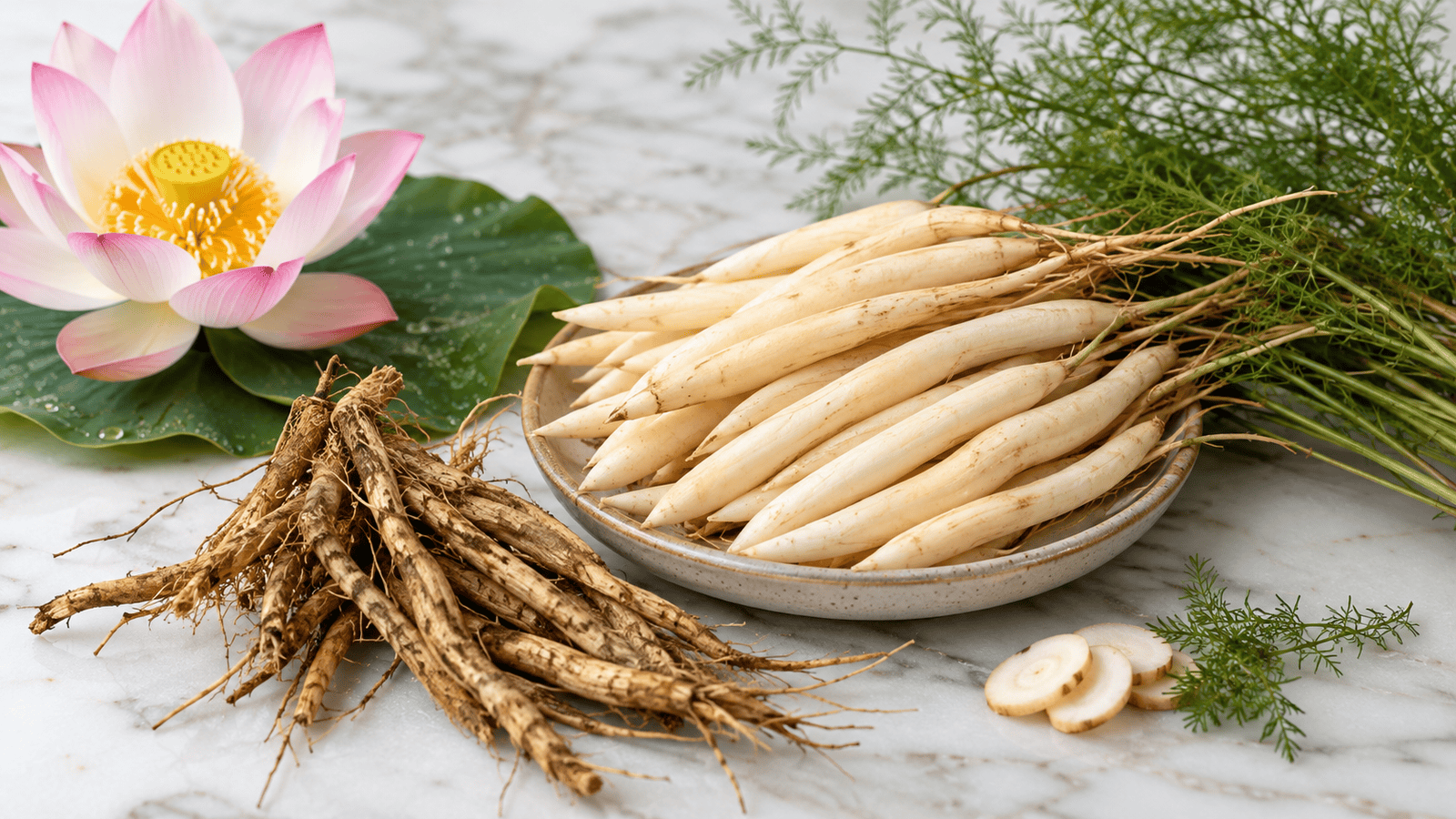
If Ashwagandha is Ayurveda’s flagship herb for male vitality, Shatavari for fertility (Asparagus racemosus) holds the equivalent position for women. Its very name offers a clue to its reputation — often translated as “she who possesses a hundred husbands” or “she who has a hundred roots,” a poetic nod to its long-standing association with feminine strength, fertility, and reproductive endurance. For centuries, Shatavari has been the go-to Rasayana (rejuvenative tonic) for women across every stage of reproductive life, from menstruation through pregnancy, postpartum recovery, and menopause.

Shatavari as the Primary Female Reproductive Rasayana

In Ayurveda, Rasayana herbs are those believed to nourish and rejuvenate the body’s tissues at a deep level, slowing depletion and restoring vitality. Shatavari holds a special place within this category specifically for its affinity to the female reproductive system. Classical texts describe it as Stanya Janana (galactagogue, supporting lactation), Garbhasthapana (pregnancy-supportive), and broadly restorative to reproductive strength.

Unlike herbs used to treat a single symptom, Shatavari was traditionally prescribed as a long-term tonic — something taken consistently over months to build reproductive resilience rather than address an isolated issue. This makes it distinct from more targeted remedies and closer in philosophy to a foundational, ongoing support herb.

Nourishing Artava Dhatu: Ayurveda's View of Ovarian Health

Central to Shatavari’s reputation is its role in nourishing Artava Dhatu — the Ayurvedic term for the reproductive tissue that governs menstruation, ovulation, and overall ovarian function in women. Artava Dhatu is considered a refined byproduct of the body’s deeper tissue layers, meaning its quality reflects the health of the entire system, not just the reproductive organs in isolation.

When Artava Dhatu is well-nourished, Ayurveda associates this with regular cycles, healthy ovulation, and strong reproductive stamina. When depleted — often due to poor digestion, chronic stress, or nutritional deficiency — irregular periods, low ovarian reserve symptoms, or difficulty conceiving may follow. Shatavari’s cooling, moistening, and nutritive qualities are traditionally used to counteract this depletion, particularly in cases where dryness, thinness, or Vata-type irregularity are present.

Estrogen Balance and Uterine Lining Support

One of the more specific and widely discussed applications of Shatavari is its relationship to estrogen activity. Ayurvedic practitioners have long used it to support women experiencing irregular cycles, low estrogen symptoms, or thin uterine lining — a factor that can affect implantation and pregnancy outcomes.

The proposed mechanism, further explored in modern research, lies in Shatavari’s phytoestrogenic compounds — plant-based molecules that can weakly mimic or modulate estrogen activity in the body. This dual-direction action is part of what makes phytoestrogens interesting: rather than simply adding estrogen, they can help modulate receptor activity, offering a more balancing rather than purely stimulating effect. This is thought to be part of why Shatavari has traditionally been used both to support uterine lining thickness in low-estrogen states and to ease symptoms in states of hormonal fluctuation.

Easing Perimenopausal Symptoms

Shatavari’s use isn’t limited to the fertility years. As women transition into perimenopause, declining and fluctuating estrogen levels often bring hot flashes, mood changes, vaginal dryness, and sleep disruption. Ayurveda has long used Shatavari during this transition, again leaning on its phytoestrogenic and Rasayana properties to help ease this hormonal shift more gradually and comfortably.

This lifelong applicability — from menstrual years through menopause — reflects Ayurveda’s broader philosophy that reproductive health isn’t a phase to manage only when trying to conceive, but a continuous thread of vitality worth supporting throughout a woman’s life.

Usage Across the Menstrual Cycle

Shatavari is typically used as a continuous daily tonic rather than a cycle-phase-specific remedy, though some traditional protocols do adjust its use slightly:

  • Follicular phase (post-menstruation to ovulation): Often used to support healthy estrogen rise and follicular development.
  • Luteal phase (post-ovulation to next period): Continued use is believed to support progesterone balance and uterine lining maintenance.
  • During menstruation: Some practitioners recommend continuing at a lower dose, while others pause briefly — this varies by practitioner and individual constitution.

Because Shatavari works as a gradual, nourishing tonic rather than a fast-acting remedy, consistency across the full cycle — sustained over at least 2–3 months — is generally considered more important than precise timing.

Traditional Preparation: With Milk or Ghee

Classical Ayurvedic preparation methods pair Shatavari with milk or ghee, and this isn’t incidental — both are considered ideal carriers (Anupana) for reproductive tonics.

Shatavari with milk (Ksheerapaka): Shatavari powder simmered in warm milk is one of the most traditional preparations, believed to enhance its nourishing, tissue-building qualities while making it easier to digest and assimilate.

Shatavari Ghrita (medicated ghee): Ghee is considered an excellent medium for delivering fat-soluble compounds deep into bodily tissues, including reproductive tissue. Shatavari-infused ghee is a classical formulation specifically used for uterine and ovarian nourishment.

Shatavari Churna (powder) with water or honey: A simpler daily form, often used when milk or ghee isn’t preferred or suitable.

What Modern Research Says About Its Phytoestrogenic Properties

Contemporary studies on Asparagus racemosus have begun to explore the plant chemistry behind its traditional reputation. Research has identified steroidal saponins — compounds called shatavarins — as key active constituents, some of which demonstrate estrogen-modulating activity in laboratory studies. This phytoestrogenic action offers a biochemical explanation for Shatavari’s traditional use in supporting estrogen balance, uterine health, and menopausal symptom relief.

Additional research has explored Shatavari’s antioxidant and adaptogenic properties, both of which may contribute indirectly to reproductive health by reducing cellular stress on ovarian and uterine tissue. While human clinical trial data is still growing, particularly around specific fertility outcomes, the existing evidence lends meaningful support to centuries of traditional use.

The Takeaway

Shatavari’s standing as Ayurveda’s primary female reproductive Rasayana isn’t based on a single mechanism, but on a broad, whole-system approach to nourishing Artava Dhatu, supporting hormonal balance, and sustaining reproductive vitality across every life stage. Its traditional pairing with milk or ghee reflects a deep understanding of how to deliver nourishment effectively, while modern research into its phytoestrogenic compounds is beginning to validate what Ayurvedic practitioners have observed for generations.

As with any reproductive tonic, Shatavari works best as part of a sustained, personalized routine — ideally guided by a qualified Ayurvedic practitioner who can tailor dosage and form to individual needs.
Shatavari for fertility Anandnagar.