Endometriosis Ayurvedic Treatment
Relieve Pelvic Pain. Support Hormonal Balance. Enhance Reproductive Health Naturally.
Endometriosis Ayurvedic Treatment
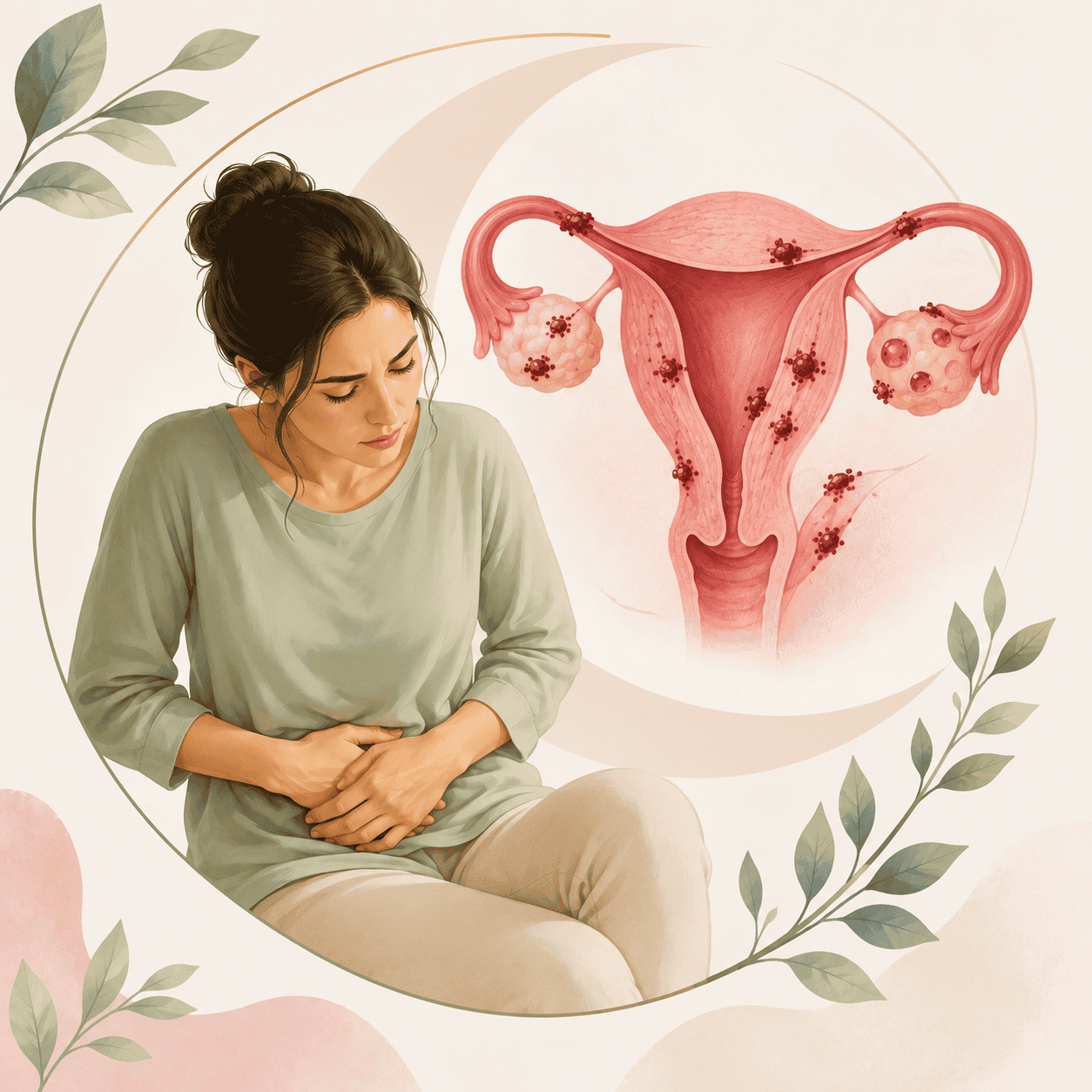
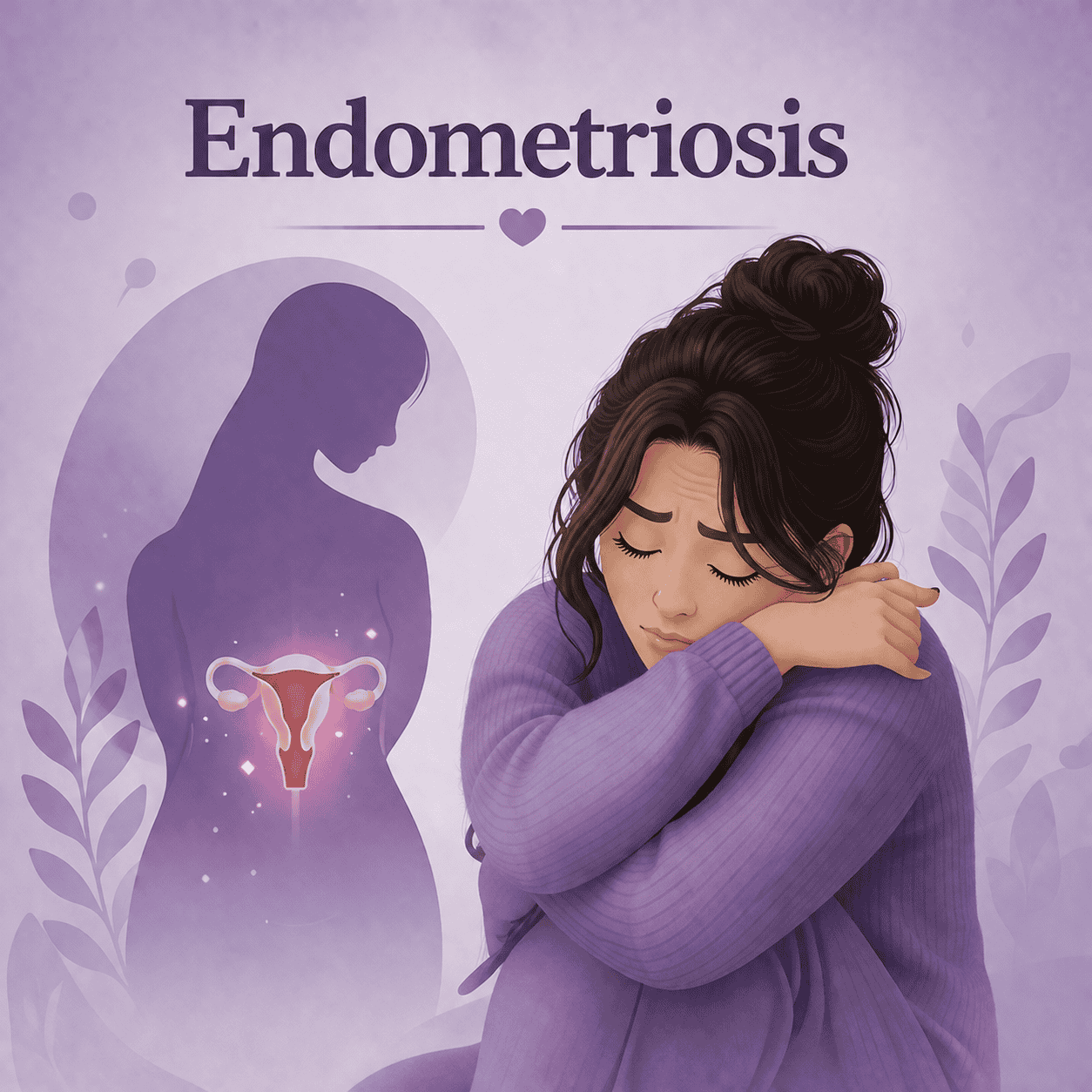
Endometriosis is one of the more painful and often under-diagnosed causes of female infertility, typically presenting as severe period pain, chronic pelvic pain, and pain during intercourse. Modern medicine describes it as endometrial-like tissue growing outside the uterus. Ayurveda reads the same condition through the lens of vitiated Rakta (blood tissue) and disturbed Vata, and Endometriosis Ayurvedic treatment is built around correcting that underlying vitiation rather than only controlling pain during flare-ups.
How Ayurveda understands endometriosis
Endometriosis is understood in Ayurveda as a disorder of the Raktavaha srotas — the channels that carry and regulate Rakta dhatu (blood tissue). When Rakta becomes vitiated and combines with aggravated Vata, the displaced tissue growth and cyclical inflammation characteristic of endometriosis develops. This is sometimes described as Antargata Raktavaha Sroto Dushti — an internal vitiation of the blood-carrying channels that produces abnormal tissue behaviour outside its normal location.
Because Vata governs movement and Rakta governs the quality of blood tissue, their combined disturbance explains why endometriosis behaves the way it does — pain that intensifies with the menstrual cycle, tissue that migrates beyond the uterus, and inflammation that recurs month after month rather than resolving on its own.
Common signs
- Severe, often disabling pain during periods (dysmenorrhea)
- Chronic pelvic pain outside of menstruation
- Pain during or after intercourse
- Heavy or irregular bleeding
- Difficulty conceiving, sometimes the first sign that leads to diagnosis
- Digestive discomfort or bloating around the time of menstruation
Underlying causes
- Rakta dushti — vitiation of blood tissue, the central process behind displaced tissue growth.
- Vata prakopa — aggravated Vata disturbing the natural downward movement of menstrual blood, allowing retrograde flow and displaced implantation.
- Agnimandya — weak digestive fire contributing to Ama formation, which compounds the inflammatory picture.
- Srotorodha — obstruction in the reproductive channels, intensifying pain as blood struggles to flow normally.
- Chronic stress — sustained Vata aggravation that worsens both pain intensity and cycle irregularity.
- Genetic and constitutional factors — some women have a Prakriti more prone to Vata-Rakta imbalance, making them more susceptible.
The dosha pattern behind endometriosis
While Vata-Rakta vitiation is the core pattern, two variations are commonly seen:
- Vata-dominant presentation — sharp, cramping pain, irregular cycles, and anxiety alongside the pelvic pain. Usually worsened by stress, irregular routine, and cold, dry conditions that aggravate Vata.
- Rakta-Pitta presentation — heavier bleeding, a burning quality to the pain, and inflammation that runs hotter. Usually associated with a Pitta-aggravating diet and lifestyle layered onto the underlying Rakta vitiation.
Identifying which pattern dominates in a given woman shapes both the Panchakarma therapy chosen and the herbal formulations used.
The treatment approach
Endometriosis Ayurvedic treatment at the clinic focuses on cleansing vitiated Rakta, calming aggravated Vata, and reducing the inflammatory cycle that drives recurring pain.
Panchakarma therapies used:
- Virechana — therapeutic purgation to cleanse vitiated Rakta and Pitta, considered central to endometriosis care.
- Uttar Basti — local uterine therapy that nourishes the reproductive tissue directly and helps reduce pelvic inflammation.
- Basti — medicated enema to pacify aggravated Vata and ease cramping pain.
- Abhyanga and Swedana — herbal oil massage with steam to improve pelvic circulation and reduce Vata-driven stiffness and pain.
- Raktamokshana — selective bloodletting, used in select cases of significant Rakta dushti to relieve congestion.
Supporting herbal formulations commonly include Guggulu (for its anti-inflammatory action), Kumaryasava, Ashokarishta, Shatavari, and Dashmoolarishta — chosen according to whether the Vata or Rakta-Pitta pattern is more dominant.
Diet and lifestyle alongside treatment
Since endometriosis involves both Vata and Rakta, daily routine is managed carefully around the menstrual cycle. Warm, well-cooked, easily digestible food; regular meal and sleep timing; and gentle, non-strenuous movement are generally favoured, along with practices that calm Vata such as warm oil abhyanga on non-bleeding days. Excess cold, dry, or spicy food; skipped meals; prolonged fasting; and high-stress periods are generally avoided, since each of these can intensify both the pain and the underlying Vata-Rakta vitiation.
What to expect from treatment
Endometriosis is a chronic condition, and Ayurvedic treatment is approached as an ongoing process rather than a one-time cure — most women are monitored across several menstrual cycles to track how pain intensity and cycle regularity change over time. Because endometriosis is a well-recognised cause of infertility, treatment is often paired with a broader fertility plan once the inflammatory pattern has been brought under better control. Dr. Sagar Narkhede reviews existing scans and reports before building a plan, and Ayurvedic treatment can be used either as the primary approach or alongside other medical care a woman may already be receiving.
If you’re dealing with painful periods, chronic pelvic pain, or a diagnosis of endometriosis and are looking for Endometriosis Ayurvedic treatment, Dr. Narkhede Ayurved & Panchkarma Clinic offers a personalised consultation with Dr. Sagar Narkhede to assess the Vata-Rakta pattern involved and recommend the right combination of Panchakarma, herbal medicine, and daily routine.