Low AMH Ayurvedic Treatment
Support Ovarian Health. Balance Hormones. Enhance Natural Fertility.
Low AMH Ayurvedic Treatment
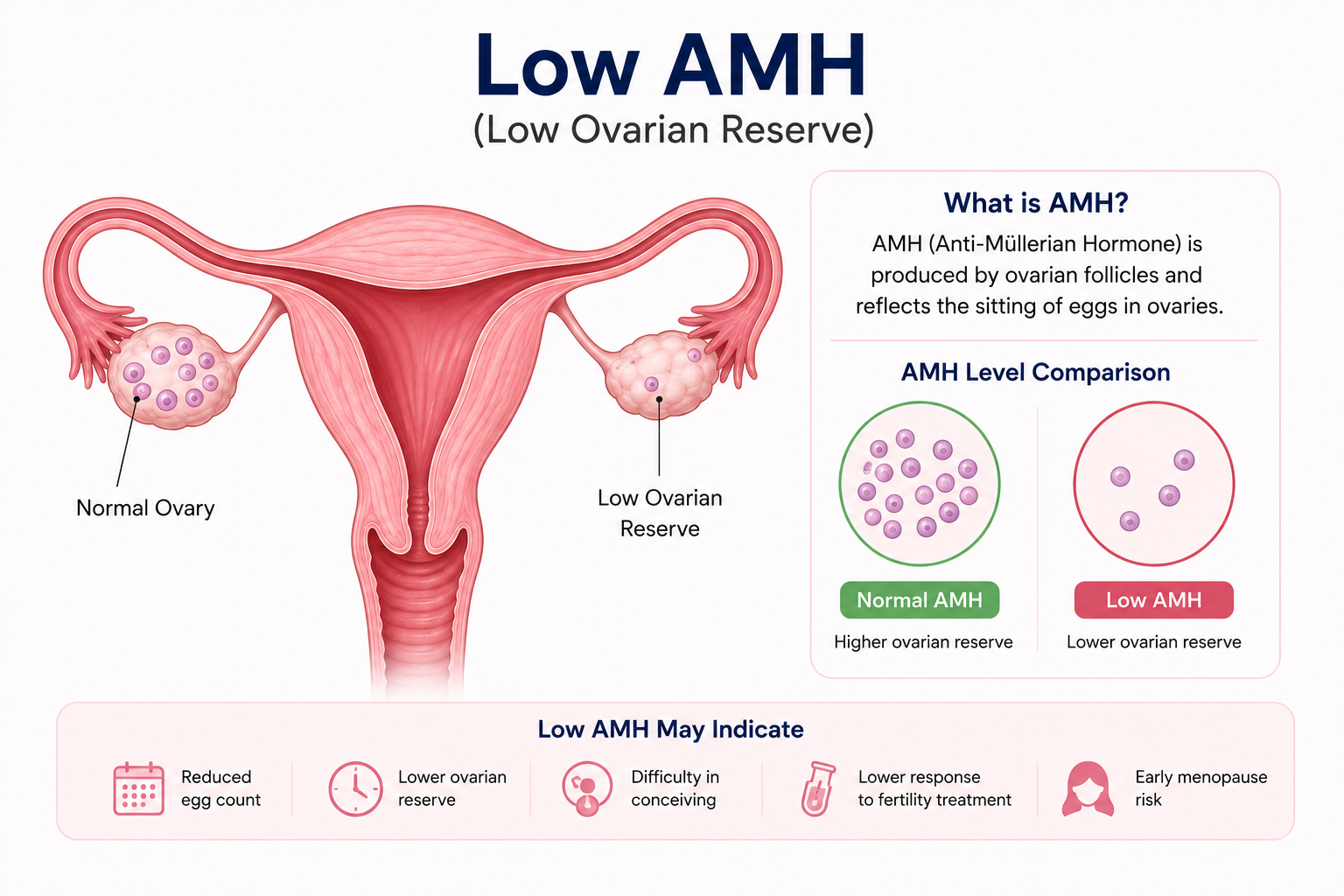
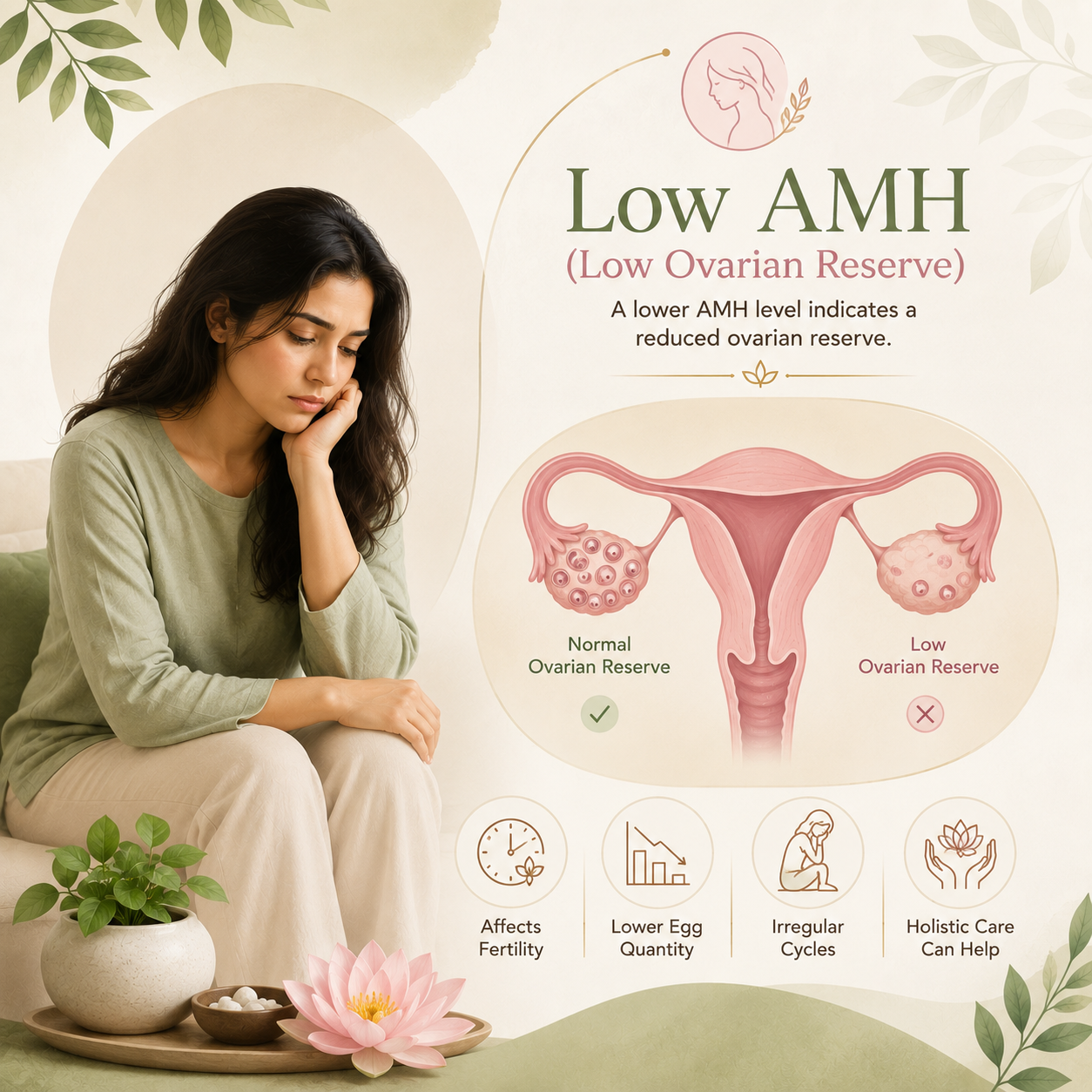
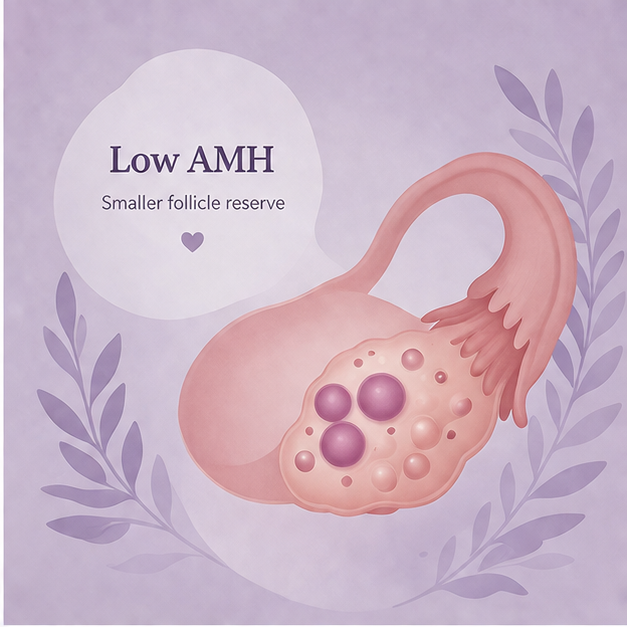
A low AMH (Anti-Müllerian Hormone) result — indicating a diminished ovarian reserve — is one of the more emotionally difficult findings a woman can receive during a fertility workup. Modern medicine reads it as a marker of egg quantity. Ayurveda approaches the same finding as Dhatu Kshaya, a depletion of the body’s reproductive tissue, and Low AMH Ayurvedic treatment is built around rebuilding and nourishing that tissue rather than treating the number itself.
How Ayurveda understands low AMH
Ayurveda describes this condition as Kshina Artava or Beeja Kshaya — a depletion of Artava dhatu, the reproductive tissue, and by extension the ovarian reserve it supports. This is fundamentally different from most of the other conditions covered on this site, which are usually about excess or obstruction (too much Kapha, blocked channels, accumulated Ama). Low AMH is instead a depletion condition — there is too little of the tissue that needs to be present, most often the result of long-standing Vata vitiation driven by chronic stress, overwork, irregular routine, or simply the natural process of ageing.
Because Vata governs movement, dryness, and depletion when aggravated, its long-term disturbance gradually erodes the density and quality of Artava dhatu — which is why Low AMH is treated with an emphasis on nourishment and rejuvenation, rather than the clearing and detoxification therapies used for congestion-based conditions.
Common signs
- A lower-than-expected AMH value on blood testing
- Shortening menstrual cycles, sometimes an early indicator before AMH is even tested
- Reduced response to ovarian stimulation during fertility treatment, if already attempted
- General signs of Vata aggravation — dryness, fatigue, disturbed sleep, or heightened anxiety
- Difficulty conceiving, often the reason the AMH test was ordered in the first place
Underlying causes
- Dhatu kshaya — the core process: gradual depletion of Artava and Shukra dhatu over time.
- Chronic Vata vitiation — from long-term stress, overwork, or an irregular lifestyle.
- Age-related decline — a natural process that Ayurveda works to slow and support rather than reverse.
- Poor Agni over time — weak digestion reducing the body’s ability to form healthy tissue (dhatu nirmana) at every stage, ultimately affecting the deepest tissues including Artava.
- Prior surgery or medical treatment — such as ovarian surgery or chemotherapy, which can directly reduce ovarian reserve.
- Chronic sleep disruption — insufficient rest is understood in Ayurveda as a direct driver of Vata aggravation and tissue depletion.
The treatment approach
Low AMH Ayurvedic treatment at the clinic centres on Rasayana chikitsa — rejuvenation therapy — aimed at nourishing Artava dhatu and pacifying the Vata vitiation behind its depletion. This is a markedly different emphasis from the clearing-based therapies used for Kapha-Ama conditions like PCOD or fibroids.
Panchakarma and supportive therapies used:
- Basti — medicated enema, considered the principal Vata-pacifying therapy and central to this treatment.
- Snehapana — internal oleation, used to counter the dryness that characterises Vata-driven depletion.
- Abhyanga and Swedana — warm oil massage with steam to calm Vata and support overall tissue nourishment.
- Uttar Basti — used selectively to nourish the reproductive tract directly.
Supporting herbal formulations commonly include Shatavari Rasayana, valued specifically for its reproductive tissue-nourishing action, along with Ashwagandha for its role in supporting Vata balance and resilience to stress, and Vidarikand, traditionally used to support reproductive tissue strength.
Diet and lifestyle alongside treatment
Because this is a depletion condition, nourishment and rest take priority over detoxification. Warm, unctuous, easily digestible food; adequate sleep; and a calm, unhurried daily routine are generally favoured, along with regular but gentle exercise rather than intense physical exertion. Excessive fasting, irregular sleep, high caffeine intake, and prolonged stress are generally avoided, since each of these directly aggravates the Vata imbalance driving the depletion.
What to expect from treatment
Low AMH reflects a gradual depletion built up over years, so Ayurvedic treatment is approached as a rebuilding process assessed over several months, with realistic expectations set from the outset. Dr. Sagar Narkhede is direct with patients that Ayurvedic treatment works to improve the overall quality of the reproductive environment and support whatever ovarian reserve remains — it does not reverse the natural decline in egg number that comes with age. For women pursuing fertility treatment such as IUI or IVF, Ayurvedic Rasayana therapy is often used alongside that treatment to support egg quality and general reproductive health during the process, and Dr. Narkhede will discuss what’s realistic for your specific case and timeline.
If you’ve received a low AMH result and are looking for Low AMH Ayurvedic treatment, Dr. Narkhede Ayurved & Panchkarma Clinic offers a personalised consultation with Dr. Sagar Narkhede to review your reports and recommend the right combination of Rasayana therapy, Panchakarma, and daily routine for your case.