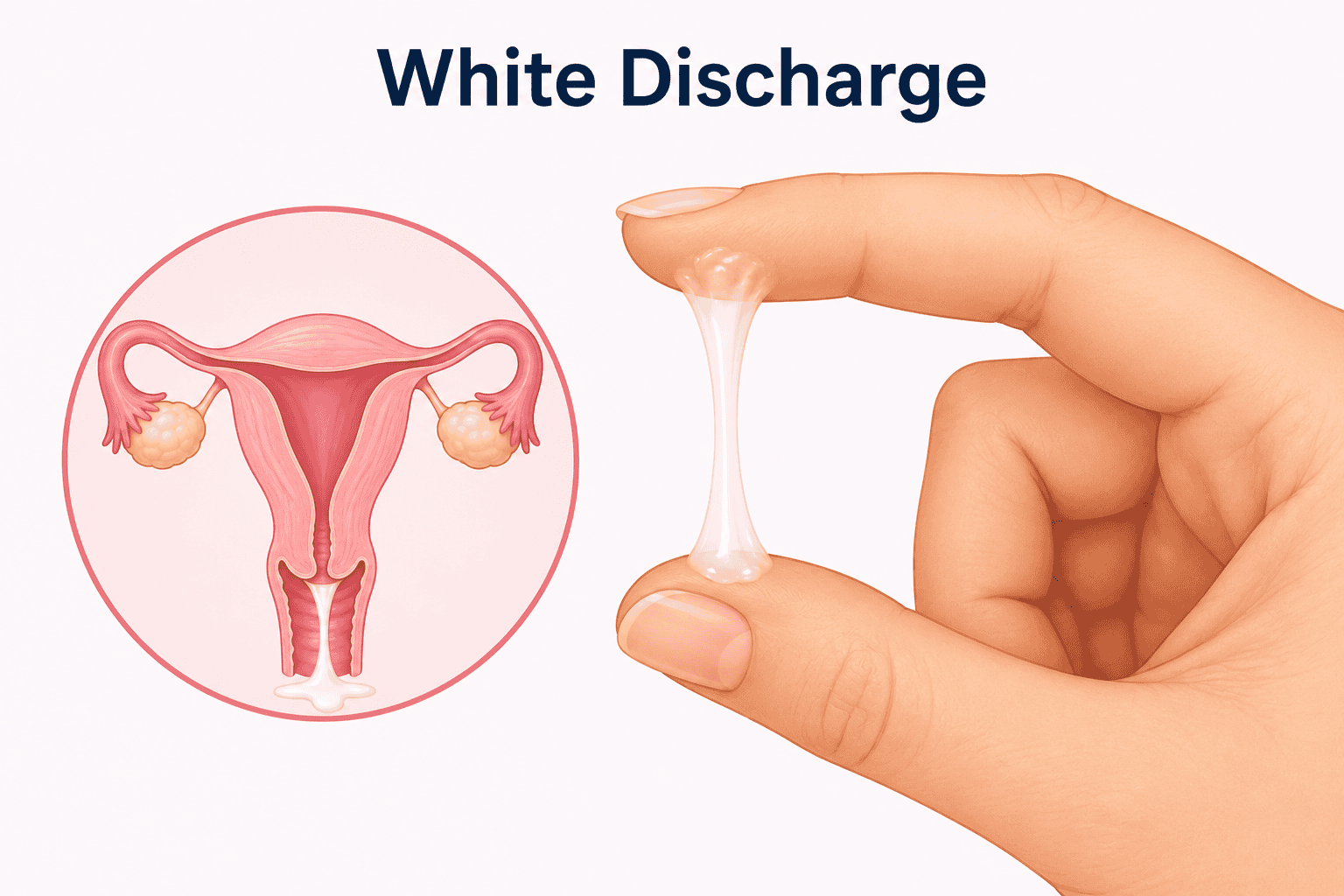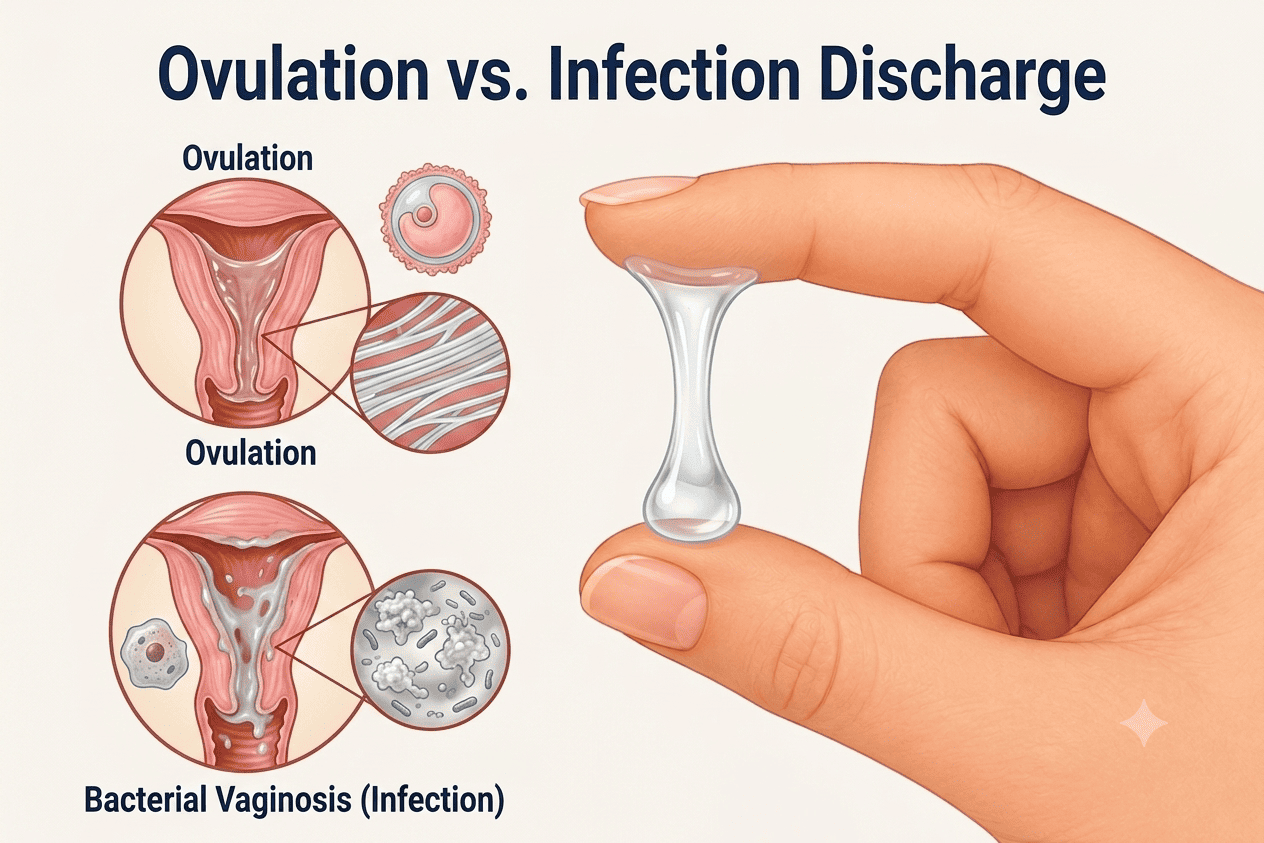
White Discharge Ayurvedic Treatment for (Leucorrhoea)
Restore Vaginal Health. Balance the Body. Feel Confident Naturally.
White Discharge Ayurvedic Treatment
Persistent white or whitish vaginal discharge is a common concern that many women live with quietly for years, often dismissing it as minor. Left unaddressed, however, it can point to a deeper imbalance that also affects fertility. Ayurveda names this condition Shweta Pradara, and White Discharge Ayurvedic treatment focuses on correcting the underlying Kapha and Meda dhatu imbalance behind it, rather than only managing the discharge itself.
How Ayurveda understands white discharge
Shweta Pradara is understood as a Kapha-dominant condition involving vitiation of Meda dhatu, the fat tissue. When Kapha accumulates and Meda dhatu becomes disturbed, the local strength and integrity of the reproductive tract weakens, making it prone to excess discharge, recurring irritation, and reduced resistance to minor infection. Ayurveda also links this to weak Agni (digestive fire) allowing Ama (undigested toxin) to build up and settle in the lower reproductive channels, adding to the Kapha burden.
Because Kapha governs structure and lubrication, its excess in this context produces exactly the pattern typically seen — a persistent, often odourless or mildly odorous discharge, a sensation of heaviness, and general fatigue, especially when the condition has continued untreated for a long time.
Common signs
- Kapha vitiation — the primary imbalance, producing excess and persistent discharge.
- Meda dushti — vitiation of fat tissue, weakening the local strength of the reproductive tract.
- Agnimandya — weak digestive fire allowing Ama to accumulate and settle in the pelvic region.
- Poor hygiene or repeated local irritation — can aggravate Kapha further and prolong the condition.
- Nutritional deficiency — chronic anaemia or poor nutrition weakening tissue resistance over time.
- Underlying gynaecological conditions — cervical erosion, infection, or hormonal imbalance can present with white discharge as a symptom rather than the root cause.
Underlying causes
- Kapha vitiation — the primary imbalance, producing excess and persistent discharge.
- Meda dushti — vitiation of fat tissue, weakening the local strength of the reproductive tract.
- Agnimandya — weak digestive fire allowing Ama to accumulate and settle in the pelvic region.
- Poor hygiene or repeated local irritation — can aggravate Kapha further and prolong the condition.
- Nutritional deficiency — chronic anaemia or poor nutrition weakening tissue resistance over time.
- Underlying gynaecological conditions — cervical erosion, infection, or hormonal imbalance can present with white discharge as a symptom rather than the root cause.
The treatment approach
White Discharge Ayurvedic treatment at the clinic focuses on reducing Kapha, correcting Meda dushti, and restoring strength to the reproductive tract, so the discharge resolves as the underlying tissue heals rather than being suppressed temporarily.
Panchakarma and local therapies used:
- Yoni Prakshalana — medicated vaginal wash using herbal decoctions, applied directly to reduce local Kapha and support tissue healing.
- Virechana — therapeutic purgation, used in cases where systemic Kapha and Ama are significant contributors.
- Basti — medicated enema, used selectively where an underlying Vata component is also present.
- Abhyanga and Swedana — general oil massage with steam to support overall metabolism and reduce Kapha.
Supporting herbal formulations commonly include astringent, tissue-strengthening herbs such as Ashoka, Lodhra, and Nagakesar, chosen for their traditional use in toning and strengthening the reproductive tract.
Diet and lifestyle alongside treatment
Since Shweta Pradara is largely a Kapha-Meda condition, a Kapha-reducing diet supports treatment meaningfully. Light, warm, freshly cooked food; regular physical activity; and good local hygiene are generally favoured. Excess dairy, sugary, and heavy or oily food; prolonged inactivity; and unmanaged stress are generally avoided, as each of these tends to reinforce the same Kapha-Meda imbalance responsible for the discharge.
What to expect from treatment
Because the condition often develops gradually and involves both Kapha and Meda dhatu, most women are monitored over several weeks to a few months to allow local tissue strength to rebuild fully rather than expecting the discharge to resolve immediately. If the discharge is linked to an underlying infection or a specific gynaecological condition, Dr. Sagar Narkhede will factor that into the treatment plan alongside the Ayurvedic approach. Left untreated for a long period, Shweta Pradara can also affect general fertility health, which is why it is treated as part of the broader female infertility assessment rather than in isolation.
If you’re dealing with persistent white discharge and are looking for White Discharge Ayurvedic treatment, Dr. Narkhede Ayurved & Panchkarma Clinic offers a personalised consultation with Dr. Sagar Narkhede to assess the underlying Kapha-Meda pattern and recommend the right combination of local therapy, internal medicine, and daily routine.