Abhyanga(Oil Massage)
Abhyanga Panchakarma: The Foundation Therapy
Abhyanga is the therapy most patients encounter first at the clinic, and for good reason — it is the preparatory foundation on which almost every other Panchakarma procedure is built. Though gentle compared to therapies like Vaman or Virechan, Abhyanga plays an essential and often underestimated role in fertility treatment.
What Abhyanga is
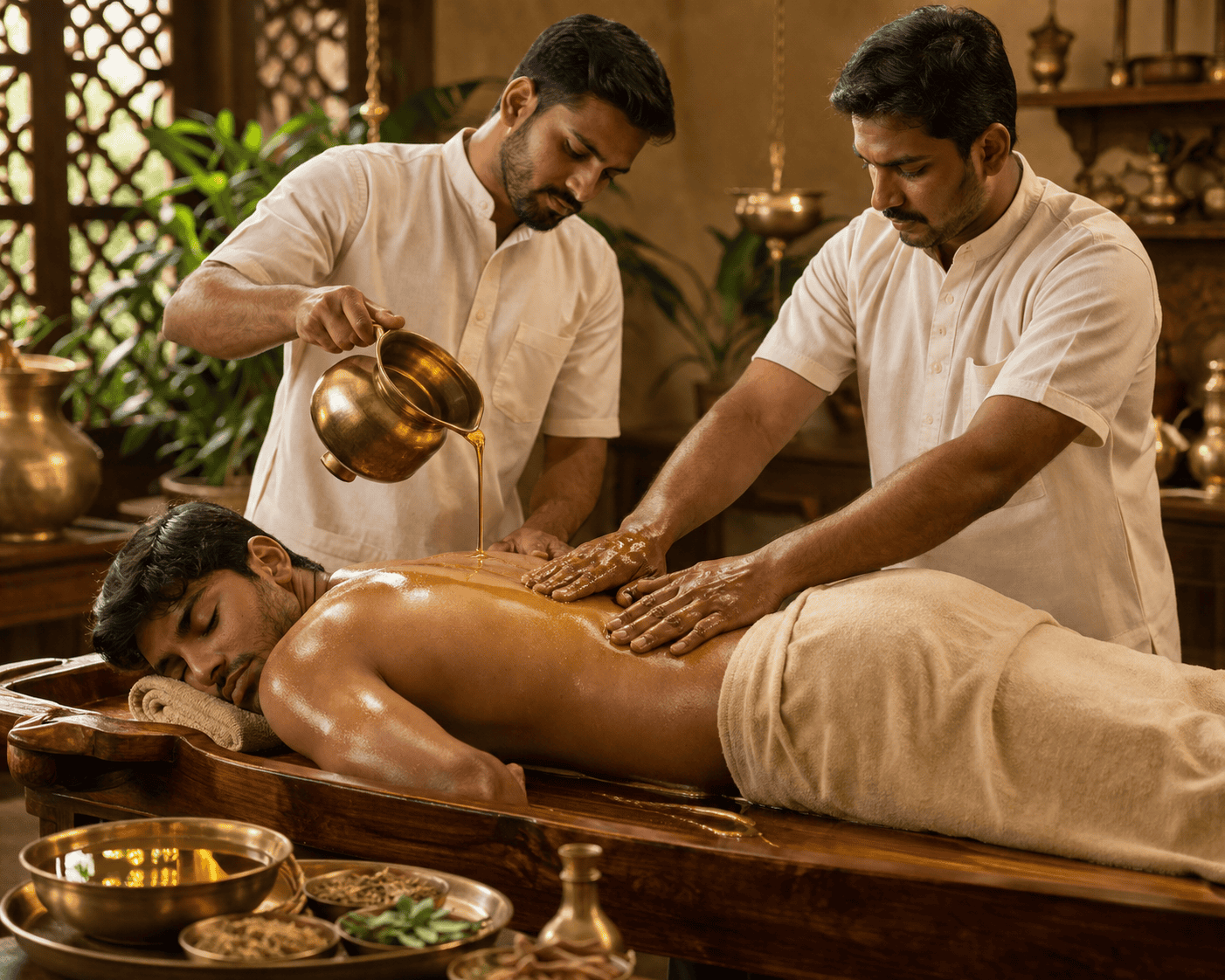
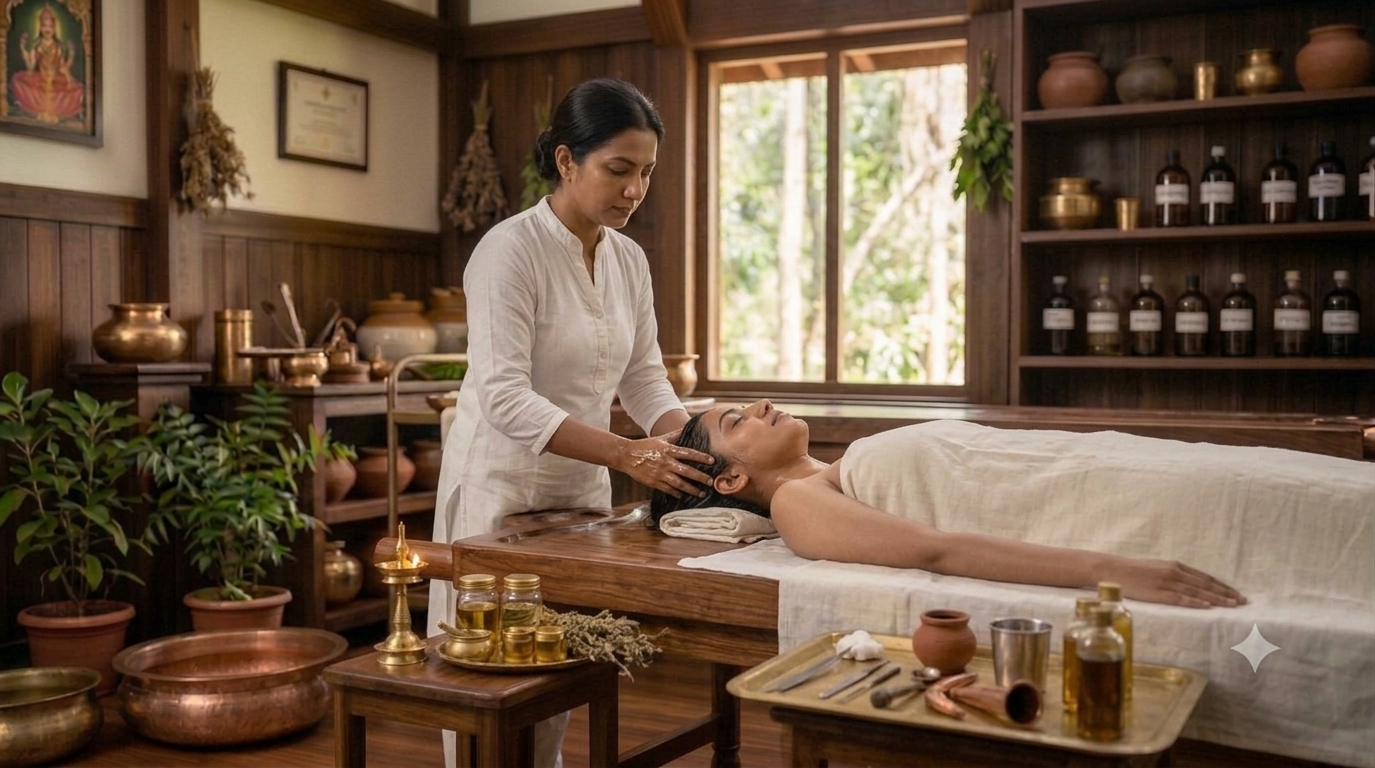
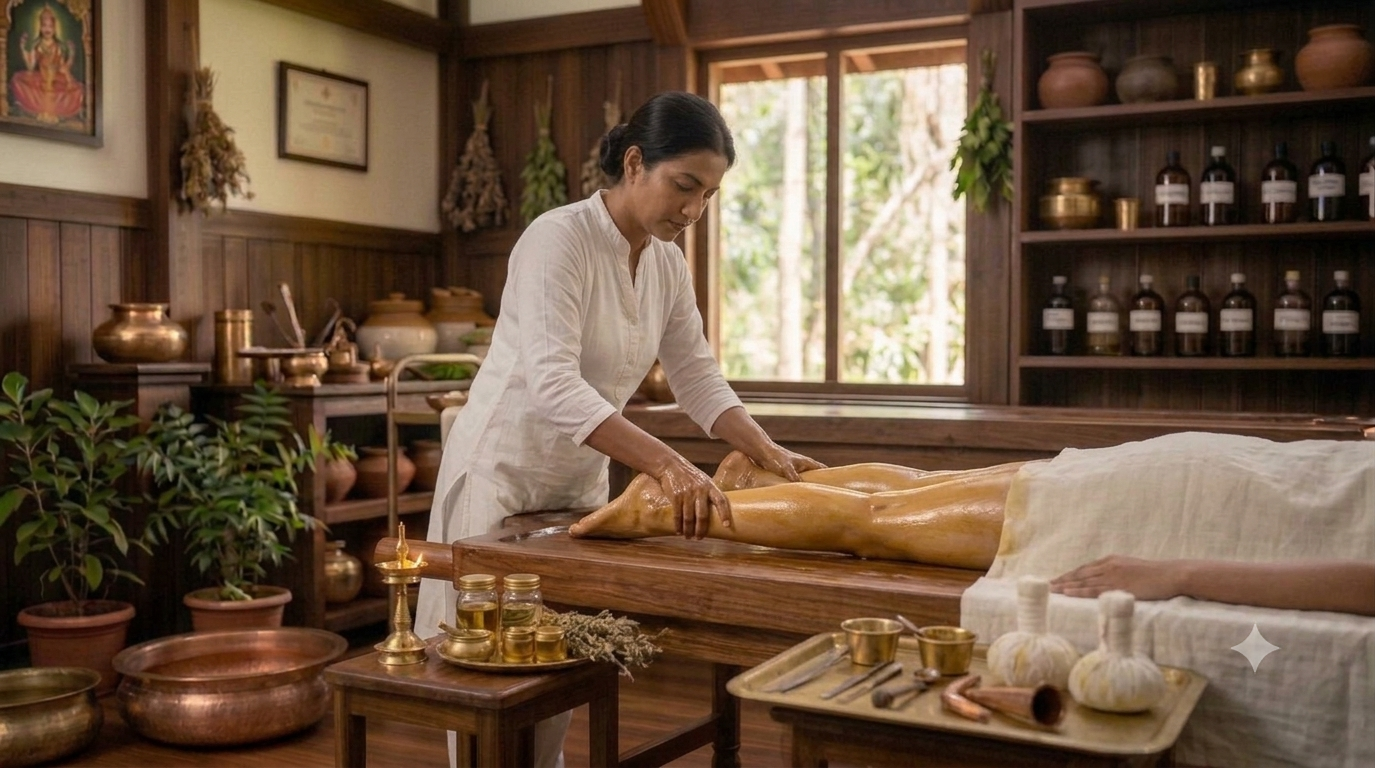
Abhyanga (अभ्यंग) is a warm, medicated oil massage applied over the whole body. The specific oil used is chosen according to the patient’s dominant dosha and the condition being treated — a Vata-pacifying oil for dryness and depletion, a lighter, more penetrating oil where Kapha needs to be reduced. Abhyanga is typically the first step of Purvakarma, the preparatory stage that precedes the main Panchakarma therapy (Vaman, Virechan, Basti, and so on), but it is also used independently as an ongoing supportive therapy throughout a treatment course.
Why it matters beyond relaxation
Abhyanga is often assumed to be a purely relaxing or cosmetic treatment, but in classical Ayurveda its role is specifically physiological. The warm oil application:
- Loosens Ama — the sticky, undigested toxin that has settled into body tissue, making it more accessible for the main therapy that follows.
- Improves circulation — supporting better blood flow to the pelvic organs and reproductive tissue.
- Pacifies Vata — the dosha most responsible for dryness, depletion, and the disturbed rhythms seen in irregular cycles and diminished ovarian reserve.
- Prepares the channels (srotas) — making the deeper cleansing action of therapies like Virechan or Vaman considerably more effective than if they were attempted without this preparation.
Skipping Abhyanga before a main Panchakarma therapy is one of the more common reasons a treatment underperforms, which is why it is never treated as optional at the clinic.
Role in fertility treatment
Because Vata governs the timing and rhythm of both the menstrual cycle and semen production, Abhyanga’s Vata-pacifying effect gives it a direct, standalone role in fertility care — not only as preparation for other therapies. It is regularly used on its own to support:
Menstrual irregularity — helping settle the Vata disturbance behind delayed or unpredictable cycles.
Low AMH — as part of the broader Rasayana approach, supporting circulation and reducing the dryness associated with tissue depletion.
General pelvic and reproductive circulation — relevant across nearly every fertility condition, in both women and men.
Stress reduction — the physical calming effect of Abhyanga supports the nervous system, which has a direct bearing on hormonal balance in both partners.
What to expect
Abhyanga is comfortable and non-invasive, typically performed over 45 minutes to an hour, and is usually administered daily over the course of several days when used as Purvakarma before a main therapy. It requires no special preparation beforehand and no significant recovery time afterward, making it one of the most accessible therapies offered at the clinic. Dr. Sagar Narkhede selects the specific oil and duration based on the patient’s Prakriti and the dosha imbalance being addressed.
If you’re beginning a course of Panchakarma or simply want to understand how Abhyanga fits into a broader fertility treatment plan, Dr. Narkhede Ayurved & Panchkarma Clinic offers a personalised consultation with Dr. Sagar Narkhede to assess your Prakriti and recommend the right approach.