
Varicocele Ayurvedic Treatment
Varicocele Ayurvedic Treatment in Male Infertility
Varicocele is one of the most common — and most correctable — causes of male infertility. It’s an enlargement of the veins within the scrotum (the pampiniform plexus) that drain blood from the testicle, similar to a varicose vein in the leg. Faulty valves let blood pool, the veins swell, and over time this raises testicular temperature and oxidative stress — both of which quietly damage sperm production and quality.
It’s found in about 15% of all men, but in 35–40% of men being evaluated for infertility, making it disproportionately common among couples struggling to conceive. It occurs most often on the left side, due to the anatomy of the left testicular vein.
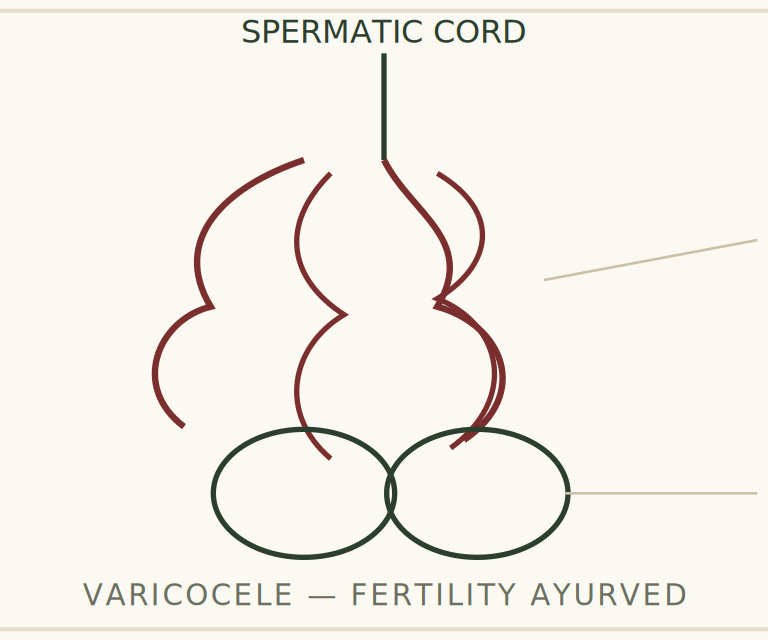
How it affects fertility
- Raised scrotal temperature interferes with the temperature-sensitive process of sperm production
- Oxidative stress from pooled, deoxygenated blood damages sperm DNA, shape, and motility
- Reduced blood flow starves the testicle of oxygen and nutrients needed for healthy sperm development
- Over time, varicocele can contribute to oligozoospermia (low count), asthenozoospermia (poor motility), and teratozoospermia (abnormal shape) — the three defects covered earlier
It’s found in about 15% of all men, but in 35–40% of men being evaluated for infertility, making it disproportionately common among couples struggling to conceive. It occurs most often on the left side, due to the anatomy of the left testicular vein.
Grades of varicocele
- Grade I — felt only when straining (Valsalva manoeuvre)
- Grade II — felt by hand at rest, not visible
- Grade III — visible through the skin, a “bag of worms” appearance
Symptoms of varicocele
- Ofen no symptoms – Many men with varicocele feel nothing unusual and only discover it during a fertility work-up.
- Dull, aching pain – A heavy or dragging ache in the scrotum, especially after standing, exercise, or by day’s end.
- Visible swelling – A “bag of worms” appearance or feel above the testicle, more noticeable when standing.
- Testicular shrinkage – The affected testicle may appear smaller than the other over time.
- Fertility difficulty – Trouble conceiving is often the first sign that brings men in for evaluation.
- Relief when lying down – Discomfort typically eases when lying flat, as blood drains more easily from the veins.
Varicocele Ayurvedic Treatment in Male Infertility
Ayurveda approaches varicocele not merely as a swollen vein, but as a sign of deeper imbalance affecting circulation and reproductive tissue together. The Ayurvedic treatment for varicocele-related male infertility focuses on correcting that root imbalance, rather than just addressing the vein itself.
The Ayurvedic understanding
Varicocele is classified as Siraja Granthi — a vein-related swelling caused by vitiated Vata and Kapha doshas disturbing the normal flow of Rakta (blood tissue) through the local channels (Sira). This stagnation:
- Generates local heat, seen as the driver of oxidative damage to nearby tissue
- Impairs nourishment to Shukra Dhatu (reproductive tissue), since healthy sperm formation depends on adequate Rakta and Agni (metabolic fire) reaching it
- Over time, contributes to depleted or poor-quality Shukra Dhatu — showing up as low count, poor motility, or abnormal sperm shape
The Ayurvedic treatment goal, therefore, is twofold: restore healthy circulation in the affected veins, and protect and rebuild Shukra Dhatu from the heat and oxidative damage already caused.
Core components of Varicocele Ayurvedic Treatment
1. Panchakarma detoxification
Circulation-focused therapies aimed at clearing stagnation and pacifying aggravated Vata-Kapha:
- Basti (medicated enema therapy) — considered the primary treatment for Vata disorders, helping regulate circulation and reduce venous congestion
- Local supportive measures to ease pooling and swelling in the affected area
2. Rakta-Shodhana (blood-purifying) herbs
Herbal formulations traditionally used to purify and tone blood tissue, reduce vein pooling, and calm local inflammation — supporting healthier circulation through the pampiniform plexus.
3. Vajikarana rasayana therapy
Once circulation is addressed, herbs are introduced to rebuild the reproductive tissue itself:
- Ashwagandha — supports tissue strength and reduces stress-related depletion
- Gokshura — supports urogenital health and healthy blood flow
- Kapikacchu (Mucuna pruriens) — supports sperm count and motility
- Shatavari — cooling and Pitta-balancing, useful where heat has affected sperm morphology
4. Diet correction
Reducing heat-generating, heavy, and processed foods that aggravate Pitta and Kapha, while favoring foods that support healthy circulation and Agni (digestive fire).
5. Dinacharya (lifestyle) guidance
- Avoiding prolonged standing and tight clothing that increase venous pressure
- Reducing heat exposure (saunas, laptops on the lap, hot baths)
- Gentle activity and posture correction to support venous return
- Stress reduction, since chronic stress aggravates Vata
What makes it different from just "treating the vein"
Unlike surgery, which addresses the mechanical blockage, Ayurvedic treatment works on the underlying Vata-Kapha imbalance and rebuilds the Shukra Dhatu that heat and oxidative stress have already depleted — which is why it’s often paired with the same Vajikarana approach used for oligozoospermia, asthenozoospermia, and teratozoospermia individually.