
Sperm Defect
Ayurvedic Treatment
Sperm Defect
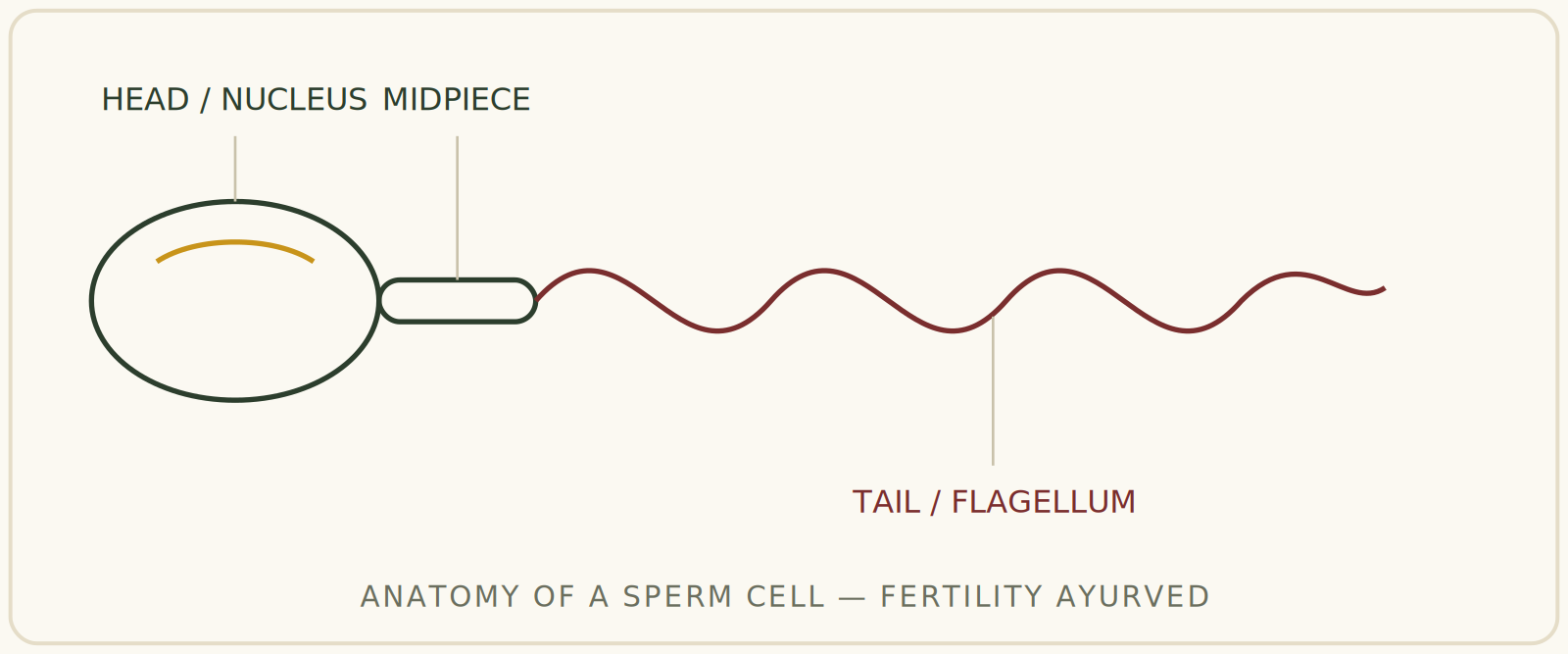
Sperm defects, also known as abnormal sperm morphology, refer to changes in the size, shape, or structure of sperm. Healthy sperm have an oval-shaped head and a long tail that help them swim efficiently and fertilize the egg. When a large percentage of sperm have abnormal shapes, it may reduce the chances of natural conception. However, abnormal morphology alone does not always mean infertility, and many men can improve their fertility with proper diagnosis, treatment, and lifestyle modifications.
The four core defects
1. Oligozoospermia (Low Sperm Count)
Oligozoospermia (also called oligospermia) is a condition where a man’s semen contains a lower-than-normal concentration of sperm — below 15 million sperm per millilitre of semen (WHO reference value). It’s one of the most common findings on a semen analysis and a leading contributor to male-factor infertility.
Severity levels
- Mild — 10–15 million/ml
- Moderate — 5–10 million/ml
- Severe — under 5 million/ml
- Cryptozoospermia — sperm are present only in extremely low numbers, detectable after centrifuging the sample
Common Causes of Oligozoospermia
- Varicocele — enlarged scrotal veins raising testicular temperature
- Hormonal imbalance — low testosterone, high prolactin, thyroid issues
- Infections — STIs, mumps orchitis, prostatitis
- Genetic factors — Klinefelter syndrome, Y-chromosome microdeletions
- Lifestyle — smoking, alcohol, obesity, chronic stress, poor sleep
- Heat & environment — tight clothing, laptops on lap, saunas, toxin exposure
- Medications — certain steroids, chemotherapy, some blood pressure drugs
The Ayurvedic view
Low sperm count is read as a sign of Shukra Kshaya — quantitative depletion of Shukra Dhatu, the reproductive tissue, usually linked to weak Agni (digestive-metabolic fire) failing to nourish the final tissue layer, and aggravated Vata drying out the tissue.
Sperm defect ayurvedic tereatment
- Correcting Agni through diet and digestion-supporting herbs
- Panchakarma detox (Basti therapy in particular, indicated for Vata-driven depletion)
- Vajikarana rasayana herbs — Ashwagandha, Kapikacchu (Mucuna pruriens), Gokshura — to build Shukra Dhatu
- Lifestyle correction — sleep, heat avoidance, stress reduction
- Repeat semen analysis after 90 days (a full spermatogenesis cycle) to track improvement
2. Asthenozoospermia — Poor Motility
Asthenozoospermia is a semen abnormality in which sperm show poor or reduced motility — they don’t swim well enough to travel through the female reproductive tract and reach the egg. It’s diagnosed when fewer than 40% of sperm show total motility, or fewer than 32% show progressive motility (forward-moving), per WHO reference values.
Severity levels
- Mild — total motility 30–40%
- Moderate — total motility 20–30%
- Severe — total motility below 20%
Common causes of Asthenozoospermia
- Varicocele — raises testicular temperature, damaging sperm tails and energy production
- Infections — prostatitis, epididymitis, STIs causing inflammation
- Oxidative stress — excess free radicals damaging the sperm’s midpiece (its energy engine)
- Hormonal imbalance — low testosterone affecting sperm maturation
- Genetic/structural defects — abnormal flagellum structure (e.g., primary ciliary dyskinesia)
- Lifestyle factors — smoking, alcohol, obesity, sedentary habits, poor diet
- Heat & toxin exposure — tight underwear, laptop heat, pesticide/chemical exposure
- Prolonged abstinence — very long gaps between ejaculations can reduce motility in the sample
3. Teratozoospermia — Abnormal Shape
Teratozoospermia is a semen abnormality in which a high proportion of sperm have an irregular shape — defects in the head, midpiece, or tail that impair their ability to fertilise an egg. It’s diagnosed when fewer than 4% of sperm have a normal form, based on strict (Kruger) morphology criteria.
What "normal shape" means
Under strict criteria, a normal sperm has:
- An oval, smooth head with a well-defined acrosome (the cap covering 40–70% of the head, needed to penetrate the egg)
- A straight, uniform midpiece attached correctly to the head
- A single, uncoiled tail of normal length, without kinks or bends
Severity levels
- Mild — 2–4% normal forms
- Moderate — 1–2% normal forms
- Severe — under 1% normal forms
Common causes Teratozoospermia
- Varicocele — heat and oxidative stress disrupting sperm development
- Infections — genital tract infections or inflammation
- Oxidative stress — free radical damage during sperm formation
- Hormonal imbalance — disrupted testosterone/FSH affecting maturation
- Genetic factors — chromosomal abnormalities, globozoospermia (a rare genetic condition causing round-headed sperm with no acrosome)
- Lifestyle — smoking, alcohol, obesity, poor diet, high stress
- Environmental exposure — heat, pesticides, heavy metals, radiation
The Ayurvedic view
Abnormal sperm shape is linked to aggravated Pitta dosha, which governs form, transformation, and heat in the body. Excess Pitta is thought to “cook” or distort the developing Shukra Dhatu during its formation, resulting in poorly formed sperm. Weak Agni compounds this by producing incompletely matured tissue at each stage of Dhatu formation.
How we approach it at the clinic
- Pitta-pacifying therapy — cooling internal herbs and Panchakarma measures like Virechana to clear excess heat
- Vajikarana rasayana herbs — Shatavari (cooling, Pitta-balancing) alongside Ashwagandha and Gokshura to support healthy tissue formation
- Antioxidant support — herbs and diet to reduce oxidative damage during sperm development
- Diet correction — reducing heat-generating, processed, and inflammatory foods
- Lifestyle changes — heat avoidance, stress reduction, adequate sleep
- Follow-up semen analysis after about 90 days, since morphology reflects a full spermatogenesis cycle
4. Azoospermia — No Sperm Present
Azoospermia is the complete absence of sperm in the ejaculate — confirmed only after examining a centrifuged semen sample under a microscope, since sperm can sometimes be present in very low numbers that aren’t visible otherwise. It’s the most severe male-factor finding and affects roughly 1% of all men, and 10–15% of men being evaluated for infertility.
Common causes of Asthenozoospermia
Obstructive -
- Vasectomy (or failed vasectomy reversal)
- Congenital absence of the vas deferens (often linked to CFTR gene mutations, the cystic fibrosis gene)
- Infections causing scarring (epididymitis, STIs, tuberculosis)
- Prior surgery or trauma in the groin/pelvic area
Non -Obstructive -
- Genetic conditions — Klinefelter syndrome (XXY), Y-chromosome microdeletions
- Undescended testes (cryptorchidism) in childhood
- Hormonal disorders — low FSH/LH from pituitary or hypothalamic problems
- Chemotherapy, radiation, or certain medications
- Varicocele (in severe, longstanding cases)
- Testicular injury, infection (mumps orchitis), or torsion
The Ayurvedic view
Azoospermia represents the most advanced stage of Shukra Kshaya — near-total depletion or blockage of Shukra Dhatu. This is understood either as a Margavarodha (obstruction in the channels, Shukravaha Srotas) or a deeper Dhatu Kshaya where the tissue itself is not being formed, often tied to long-standing Vata-Pitta imbalance and very weak Agni across all seven Dhatus.
How we approach it at the clinic
Because azoospermia has two very different underlying pictures, treatment depends heavily on which type is present:
- Thorough diagnostic correlation — Dr. Narkhede reviews hormone and ultrasound findings alongside Ayurvedic assessment before recommending a course
- Srotoshodhana (channel-clearing) therapy — Panchakarma measures aimed at clearing suspected obstruction
- Deep Rasayana building — an extended Vajikarana herbal course to support any residual sperm production in non-obstructive cases
- Realistic guidance — in cases with little chance of natural production, honest counsel on surgical sperm retrieval combined with assisted reproduction, rather than prolonged herbal treatment alone