Yoga for Male Fertility: Poses to Boost Reproductive Health
When it comes to male fertility, conversations often center on herbs, diet, and lab reports — but yoga is an equally powerful, and frequently overlooked, part of the picture. Beyond flexibility and relaxation, specific yogic practices directly target two of the biggest physiological contributors to poor sperm quality: oxidative stress and pelvic congestion. Combined with Ayurveda’s long-standing emphasis on the mind-body connection, yoga offers a practical, sustainable way for men to actively support their reproductive health.
Yoga's Role in Reducing Oxidative Stress and Pelvic Congestion
Oxidative stress occurs when there’s an imbalance between free radicals and the body’s antioxidant defenses, and it’s one of the most well-documented contributors to poor sperm quality — damaging sperm DNA, reducing motility, and impairing overall sperm function. Chronic stress, poor circulation, and sedentary habits all contribute to elevated oxidative stress in the body, including in reproductive tissue.
Pelvic congestion — the buildup of stagnant blood flow in the pelvic region, often from prolonged sitting or inactivity — is another frequently overlooked factor. Reduced circulation to the testes can affect temperature regulation and nutrient delivery, both of which play a role in healthy sperm production.
Yoga addresses both of these mechanisms directly. Physical postures improve blood circulation to the pelvic and reproductive organs, helping to counteract congestion, while the deep breathing and relaxation components of yoga practice help lower systemic stress markers associated with oxidative damage. This dual action — mechanical and physiological — is part of why yoga is increasingly recommended alongside herbal and lifestyle interventions for male fertility support.
Key Poses and Practices for Reproductive Health
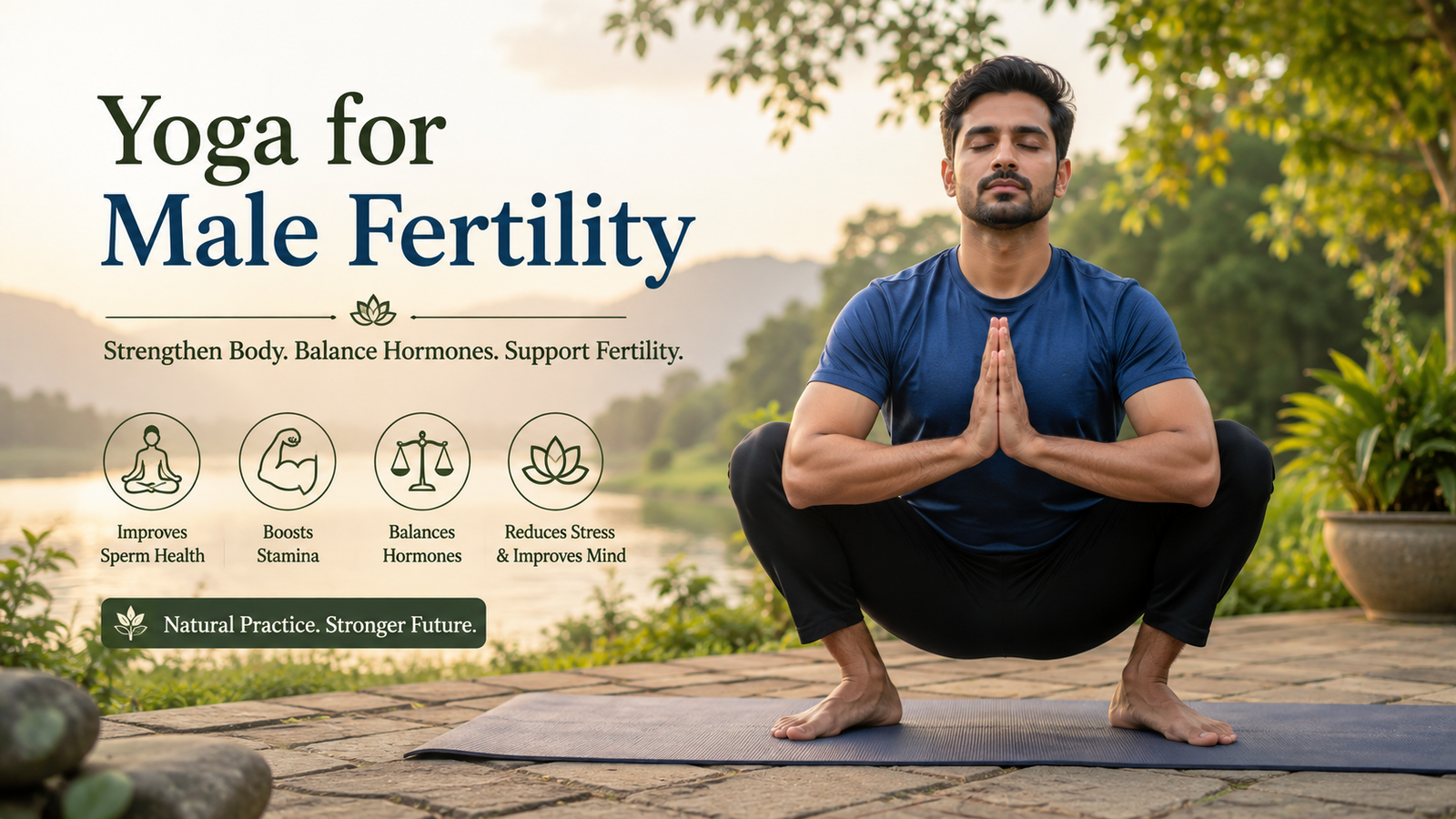
Malasana (Garland Pose / Deep Squat)
This deep squatting posture opens the hips and groin while encouraging healthy blood flow to the pelvic floor and reproductive organs. Malasana is also associated with supporting healthy digestion and elimination — relevant given how closely digestive health ties into overall vitality in holistic health traditions. For men who spend much of the day seated, this pose directly counters the pelvic stagnation that prolonged sitting creates.
Paschimottanasana (Seated Forward Bend)
A calming forward fold that stretches the entire back body while gently compressing and then releasing the abdominal region, encouraging circulation to the pelvic organs. Beyond its physical benefits, Paschimottanasana has a notably calming effect on the nervous system, making it a valuable pose for reducing the stress response that contributes to oxidative damage.
Sarvangasana (Shoulder Stand)
This classical inversion is traditionally believed to improve circulation throughout the body, including to the reproductive and endocrine systems, by reversing the usual downward pull of gravity. Practitioners often note its balancing effect on hormonal function more broadly. Because it’s a more advanced pose, it should be approached gradually and, ideally, learned under guidance to ensure proper form.
Kapalabhati Pranayama (Skull-Shining Breath)
This energizing breathing practice involves short, forceful exhales paired with passive inhales, generating internal heat and stimulating circulation throughout the abdominal and pelvic region. Kapalabhati is also valued for its detoxifying effect, believed to help clear stagnation and support overall vitality. Because of its intensity, it should be practiced on an empty stomach and built up gradually, starting with shorter rounds.
The Ayurvedic Mind-Body Connection: Stress and Shukra Dhatu
Ayurveda has long emphasized what modern research is increasingly confirming: the mind and reproductive system are deeply, directly connected. In classical Ayurvedic understanding, Shukra Dhatu — the reproductive tissue — is considered the most refined and, therefore, the most sensitive of the body’s seven tissue layers. Because it sits at the end of a long chain of tissue transformation, it’s also the tissue most easily depleted by disturbances elsewhere in the system, particularly those originating in the mind.
Chronic stress, in Ayurvedic terms, aggravates Vata dosha, the energy governing movement and the nervous system. Aggravated Vata is understood to interfere with the steady, nourishing processes required to build healthy Shukra Dhatu, contributing to depletion over time. This aligns closely with what modern science observes: elevated cortisol from chronic stress suppresses the hormonal pathway responsible for testosterone production, which in turn affects sperm generation.
Yoga sits at the intersection of these two frameworks. Its physical postures work to improve circulation and reduce the pelvic congestion that Ayurveda might describe as blocked or stagnant Shukra-vaha srotas (reproductive channels), while its breathing and meditative components directly calm the stress response responsible for both elevated cortisol and aggravated Vata. In this sense, a consistent yoga practice isn’t just physical exercise — it’s a direct intervention on the very mind-body pathway Ayurveda has long identified as central to reproductive health.
Building a Sustainable Practice
For men looking to incorporate these practices into their routine, consistency matters more than intensity. A short daily or near-daily practice — even 15–20 minutes combining a few of these poses with a brief Kapalabhati session — tends to be more effective over time than occasional, longer sessions. Because sperm regeneration takes approximately 74 days, it’s worth committing to a consistent practice for at least 3 months before expecting to see meaningful change in semen parameters.
As with any new physical practice, those with existing health conditions — particularly high blood pressure, hernia, or recent abdominal surgery — should consult a doctor before attempting more advanced poses like Sarvangasana or intensive breathing practices like Kapalabhati.
The Takeaway
Yoga offers men a practical, evidence-aligned way to support fertility from multiple angles at once — improving pelvic circulation, reducing oxidative stress, and directly calming the stress response that Ayurveda has long linked to reproductive tissue depletion. Poses like Malasana, Paschimottanasana, and Sarvangasana, paired with practices like Kapalabhati, form a well-rounded approach that complements dietary and herbal fertility support, grounded in the same mind-body understanding Ayurveda has emphasized for centuries.