
Yoga Asanas to Improve Fertility in Women Naturally
For many women navigating fertility challenges, yoga offers something modern medicine alone often can’t provide: a direct, physical way to support the body’s own reproductive rhythms. While yoga isn’t a replacement for medical care, a growing body of both traditional Ayurvedic understanding and modern research points to real, measurable benefits when it comes to preparing the body for conception — particularly through improved pelvic circulation and reduced stress hormones.
How Yoga Supports the Reproductive System
Yoga’s benefits for fertility come down to two closely connected mechanisms: blood circulation and cortisol regulation.
Pelvic blood circulation. The ovaries and uterus rely on healthy blood flow to function optimally — to support follicle development, maintain a receptive uterine lining, and sustain hormonal signaling. Many yoga postures are specifically designed to open the hips and pelvis, gently increasing circulation to these reproductive structures. Poses that involve hip opening, gentle inversion, or supported relaxation all encourage blood to move more freely through the pelvic region, an area that can become congested from prolonged sitting, stress, or sedentary lifestyles.
Cortisol reduction. Chronic stress elevates cortisol, and sustained high cortisol is known to disrupt the hormonal signaling pathway responsible for regulating ovulation. Yoga’s combination of deep breathing, mindful movement, and parasympathetic nervous system activation has been shown to lower cortisol levels meaningfully. For women trying to conceive — a process that often carries its own emotional weight — this stress-reduction effect may be just as important as the physical benefits of the postures themselves.
Together, these two mechanisms make yoga a uniquely well-suited practice for supporting fertility: it’s gentle enough to be sustainable, yet targeted enough to meaningfully affect the systems most relevant to conception.
Key Asanas for Ovarian and Uterine Health
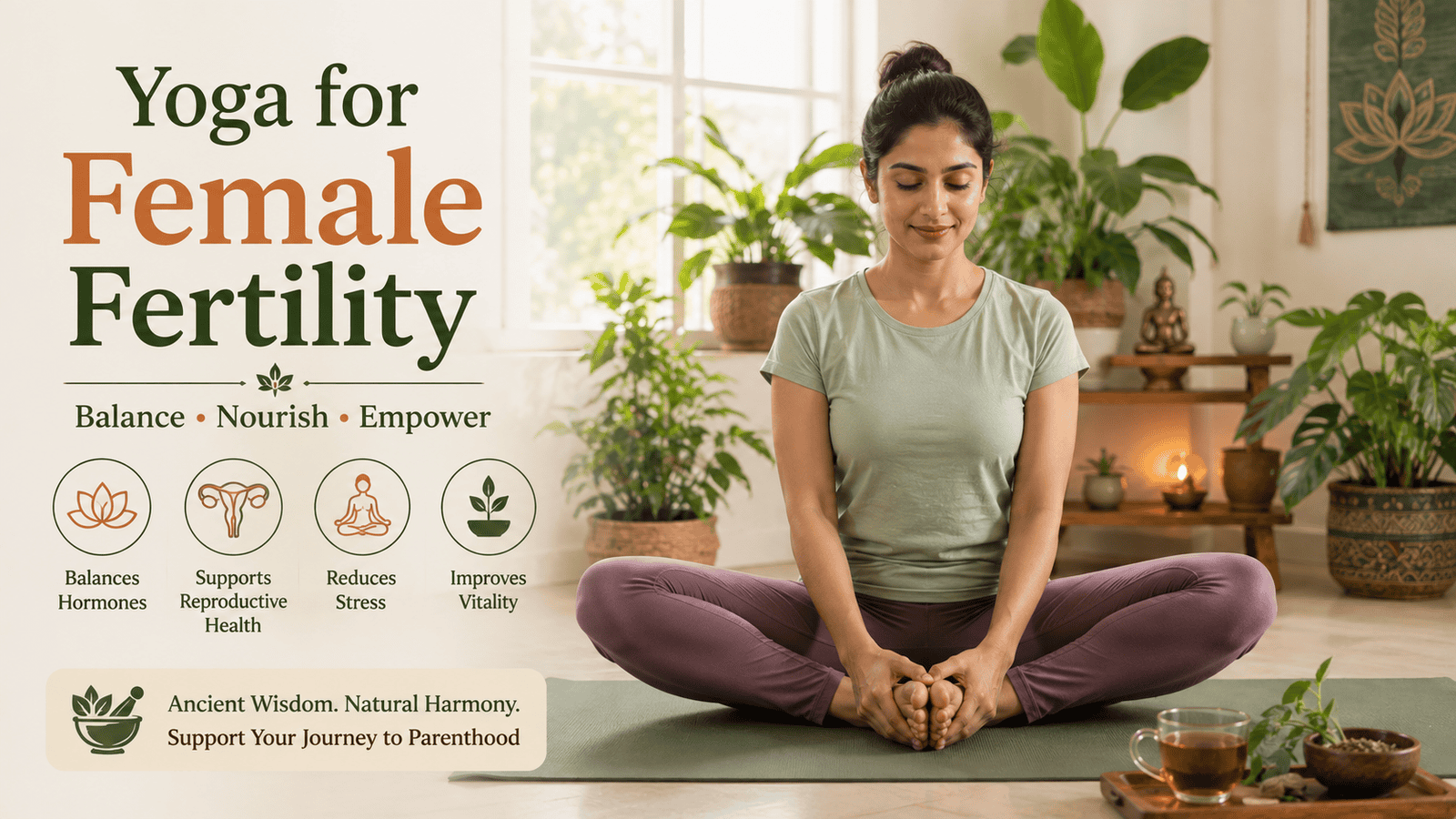
Baddha Konasana (Bound Angle Pose / Butterfly Pose)
This seated hip-opening pose is one of the most widely recommended postures for fertility. Sitting with the soles of the feet together and knees relaxing outward gently stretches the inner thighs and groin, encouraging blood flow into the pelvic region. In Ayurvedic and yogic tradition, this pose is associated with supporting ovarian function and easing menstrual irregularity by relieving tension held in the hips and lower abdomen.
Viparita Karani (Legs-Up-the-Wall Pose)
A gentle inversion where the legs rest vertically against a wall while lying on the back. This restorative pose is particularly valued for its calming effect on the nervous system, helping to lower cortisol and shift the body out of a stress response. Physically, it’s also believed to improve venous return and circulation to the pelvic area, making it a favorite in fertility-focused yoga sequences for its dual benefit of relaxation and circulation support.
Bhujangasana (Cobra Pose)
This gentle backbend strengthens the spine while stretching the abdominal region, stimulating blood flow to the reproductive organs and the ovaries in particular. It’s also associated with supporting healthy digestion — relevant given how closely digestive health and reproductive tissue quality are linked in holistic health traditions. Cobra Pose is typically practiced with control and without strain, making it accessible even for beginners.
Supta Baddha Konasana (Reclined Bound Angle Pose)
A deeply restorative variation of Baddha Konasana performed lying down, often with support under the knees or back. This pose combines the hip-opening, circulation-boosting benefits of its seated counterpart with the nervous-system-calming effects of a fully reclined position. Many fertility yoga practitioners consider it one of the most effective postures for supporting both ovarian and uterine health simultaneously, precisely because it merges physical opening with deep relaxation.
A Beginner-Friendly 20-Minute Fertility Yoga Sequence
This gentle sequence can be practiced most days of the week, ideally in a quiet space with a yoga mat and a bolster or cushion for support.
1. Centering breath (2 minutes). Sit comfortably cross-legged, close your eyes, and take slow, deep breaths, allowing the belly to expand fully with each inhale. This begins shifting the nervous system into a calmer state before movement begins.
2. Baddha Konasana (4 minutes). Sit with the soles of the feet together, knees relaxed outward. Hold gently, allowing gravity to open the hips naturally rather than forcing the stretch. Breathe steadily throughout.
3. Bhujangasana (3 minutes). Lie on your stomach, hands under the shoulders, and gently lift the chest using back strength rather than pushing hard through the arms. Hold for a few breaths, release, and repeat 3–4 times.
4. Supta Baddha Konasana (5 minutes). Lie on your back, bring the soles of the feet together and let the knees fall open, using cushions under the knees for support if needed. Rest here with slow, even breathing, allowing the body to fully relax into the pose.
5. Viparita Karani (5 minutes). Lie on your back with your legs extended up a wall, arms resting comfortably at your sides. Stay here for the full 5 minutes, breathing slowly and allowing the body to settle completely.
6. Closing rest (1 minute). Come into Savasana (lying flat, arms and legs relaxed) for a final minute of stillness before slowly transitioning back to sitting.
Precautions During Ovulation
While this sequence is generally gentle and safe for most of the cycle, a few precautions are worth keeping in mind around ovulation:
- Avoid deep inversions or intense core-engaging poses during ovulation, as some practitioners recommend easing intensity during this sensitive window.
- Favor restorative poses like Supta Baddha Konasana and Viparita Karani over more active postures during the days surrounding ovulation.
- Listen to your body. Mild pelvic sensitivity around ovulation is common; if a pose causes discomfort, ease off or skip it that day.
- Avoid overexertion generally. Fertility yoga is meant to be calming and supportive, not intense — this isn’t the time for vigorous or heat-building yoga styles.
If you’re undergoing fertility treatments such as IUI or IVF, it’s also worth checking with your fertility specialist about any additional precautions specific to your treatment cycle before continuing a regular yoga practice.
The Takeaway
Yoga offers a gentle, accessible way to support fertility from the inside out — improving pelvic circulation, easing stress-driven hormonal disruption, and creating a regular, calming ritual during what can often be an emotionally demanding time. Poses like Baddha Konasana, Viparita Karani, Bhujangasana, and Supta Baddha Konasana each bring distinct benefits, and together they form a well-rounded, beginner-friendly practice that can be sustained consistently over time — which, as with most fertility-supportive practices, is where the real benefit lies.