
Low Sperm Count: Ayurvedic Remedies That Work
At Dr. Narkhede Ayurved & Panchkarma Clinic, low sperm count — or oligospermia — is one of the most common male fertility concerns I treat. Many men come to us after a semen analysis has already flagged the issue, often feeling confused about what actually caused it and unsure whether anything can genuinely be done naturally. In my experience, Ayurveda offers a clear, structured explanation for oligospermia, along with a treatment approach that has helped many of my patients see real, measurable improvement.
Understanding Oligospermia Through Shukra Kshaya
In Ayurveda, low sperm count is best understood through the concept of Shukra Kshaya — literally, depletion of Shukra Dhatu, the body’s reproductive tissue. As I often explain to patients, Shukra Dhatu is considered the final and most refined tissue produced through the digestive process, built progressively from the six tissue layers that come before it. Because it sits at the end of this long chain, it’s also the tissue most vulnerable to depletion when something upstream — digestion, stress, sleep, or lifestyle — is out of balance.
Shukra Kshaya doesn’t happen overnight, and in my consultations, I rarely find a single cause. More often, it’s the cumulative result of weak digestive fire (Agni), chronic stress, poor sleep, and lifestyle habits that quietly drain reproductive reserves over months or years. This is why I always tell patients that treating low sperm count effectively means treating the whole pattern behind it, not just the number on a lab report.
Key Herbs I Use for Rebuilding Shukra Dhatu
Once I’ve assessed a patient’s specific constitution and the likely contributors to their Shukra Kshaya, I typically build a herbal protocol around a combination of the following:
Kapikacchu (Mucuna pruriens). One of the herbs I rely on most for oligospermia. Its natural L-DOPA content is associated with supporting healthy dopamine and downstream testosterone activity, and I’ve observed it contributing to improvements in sperm count and motility over consistent use.
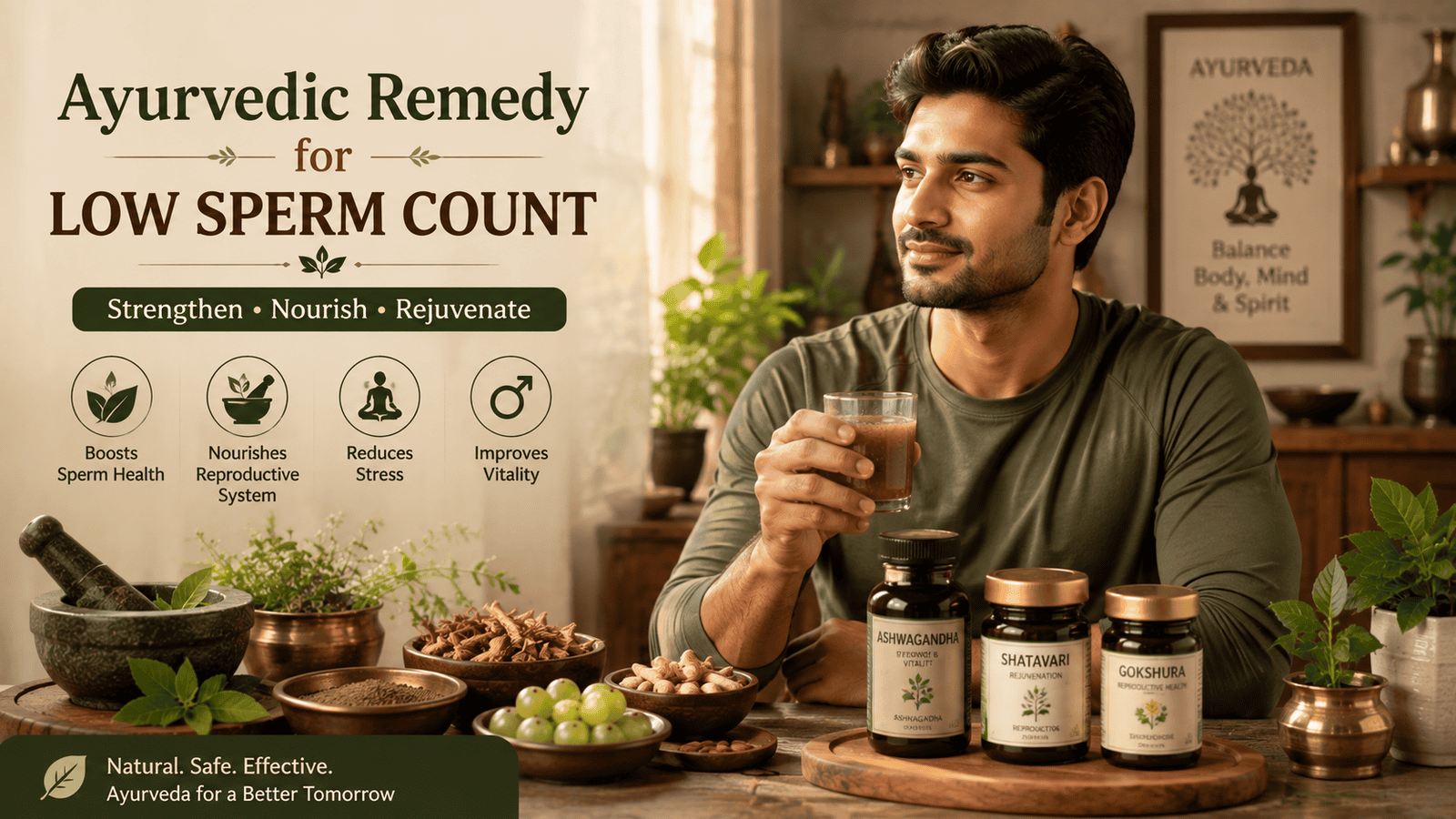
Gokshura (Tribulus terrestris). Valued for its supportive action on the urogenital system and its antioxidant properties, which I find particularly relevant given how much oxidative stress can affect sperm quality in patients with lifestyle-related depletion.
Ashwagandha. A core Vajikarana herb I use across nearly all my male fertility cases, both for its adaptogenic effect on cortisol and stress, and for its more direct traditional use in supporting reproductive strength and vitality.
I rarely prescribe these herbs in isolation — the combination, ratios, and duration are tailored to each patient’s Prakriti, digestive strength, and the specific pattern of depletion I identify during consultation.
Vajikarana Therapy Principles
These herbs sit within a broader treatment philosophy I follow called Vajikarana — one of Ayurveda’s eight classical specialties, dedicated entirely to reproductive strength and vitality. A few principles guide how I apply it in practice:
- Treatment is gradual and built over time, aligned with the roughly 74-day cycle of sperm production, which is why I generally ask patients to commit to at least 3 months of consistent treatment before we reassess.
- Digestion is addressed first. I rarely start Vajikarana herbs without first ensuring a patient’s Agni is strong enough to properly absorb and utilize them.
- Herbs are matched to constitution, not applied as a generic formula — what works well for a Vata-dominant patient with dryness and fatigue may differ from what I’d use for a Kapha-dominant patient with sluggish metabolism.
Lifestyle Contributors I See Most Often
In my clinical experience, lifestyle factors are frequently the biggest lever for improvement, and I spend as much consultation time on these as I do on herbal prescriptions:
Poor sleep. Inadequate or irregular sleep disrupts the body’s natural restorative cycles, which I consistently see reflected in weakened Shukra Dhatu. Testosterone production itself is closely tied to sleep quality, making this one of the first areas I address.
Alcohol. Regular alcohol use is one of the more direct contributors to reduced sperm count and quality that I see in patients, and reducing or eliminating it is often one of the most impactful changes a patient can make.
Smoking. Strongly associated with oxidative damage to sperm cells, and something I actively encourage patients to quit as part of any serious fertility treatment plan.
Heat exposure. Prolonged exposure to heat — tight clothing, laptops on the lap, frequent hot baths, or occupational heat exposure — can measurably affect sperm production, and it’s a factor many patients haven’t considered until we discuss it together.
How Dinacharya Counters These Contributors
This is where Dinacharya, Ayurveda’s daily routine framework, becomes central to my treatment approach. Rather than treating lifestyle correction as a vague suggestion, I give patients a specific daily structure:
- Consistent sleep and wake times, ideally sleeping by 10 PM to align with the body’s natural restorative window.
- Morning Abhyanga (self-oil massage), traditionally used to support Vata balance and overall vitality.
- Regular, moderate exercise — enough to support circulation and metabolism without excessive heat generation or overexertion, which can itself deplete Shukra Dhatu.
- Reduced or eliminated alcohol and tobacco use, framed not as a restriction but as a direct investment in reproductive recovery.
- Loose, breathable clothing and avoiding prolonged heat exposure, particularly during the 3-month treatment window.
- Stress-reduction practices, such as Pranayama or meditation, given how closely I see stress and cortisol tied to reproductive depletion in my patients.
I’ve found that patients who commit to this daily structure alongside their herbal protocol consistently see better results than those relying on herbs alone — Dinacharya essentially stops ongoing depletion while the herbs work to rebuild.
When I Recommend Semen Analysis and Medical Follow-Up
While I take a holistic approach to treatment, I want to be clear with every patient: Ayurveda works best alongside proper diagnostic monitoring, not instead of it. I typically recommend:
- A baseline semen analysis before starting treatment, so we have clear, objective markers — count, motility, morphology — to track progress against.
- Repeat semen analysis after approximately 3 months, aligned with the sperm production cycle, to assess whether the treatment is producing measurable change.
- Medical follow-up for underlying conditions — such as varicocele, hormonal disorders, or infections — that may require investigation or treatment alongside, or instead of, Ayurvedic therapy alone.
- Combined care when appropriate. For patients also pursuing IUI or IVF, I often coordinate Ayurvedic support to run alongside their fertility specialist’s treatment plan, rather than as a replacement for it.
A Final Note From My Practice
Low sperm count can feel discouraging, especially when patients arrive having already tried other approaches without much guidance on what to do next. What I’ve seen consistently at Dr. Narkhede Ayurved & Panchkarma Clinic is that a structured approach — addressing Shukra Kshaya through the right herbs, correcting the lifestyle factors quietly driving depletion, and staying connected to proper diagnostic follow-up — gives patients a real, well-rounded path toward improvement.
If you or your partner have been navigating a low sperm count diagnosis, I invite you to schedule a consultation at our clinic, where we’ll build a personalized treatment plan based on your specific constitution, lifestyle, and lab findings.