
Ayurvedic Diet Plan for Fertility to boost it Naturally in Men & Women
At Dr. Narkhede Ayurved & Panchkarma Clinic, one of the most common questions I hear from couples trying to conceive is: “What should we be eating?” It’s a simple question, but the Ayurvedic answer runs far deeper than a list of “superfoods.” In my clinical experience, diet isn’t just one factor among many in fertility — it is the foundation everything else is built on. Before we reach for herbs or therapies, we look closely at what a person eats, and just as importantly, how well their body is digesting it.
Why Diet and Digestion Matter More Than Most Couples Realize
In Ayurveda, the reproductive tissues — Shukra Dhatu in men and Artava Dhatu in women — are considered the final and most refined products of digestion. Every meal we eat is progressively transformed through seven layers of tissue (Dhatus), starting with plasma and blood, moving through muscle, fat, and bone, and finally reaching reproductive tissue. This means Shukra and Artava Dhatu are only as healthy as the digestive process that built them.
This is where Agni, or digestive fire, becomes central. When Agni is strong, food is fully broken down and its nutrients reach every tissue layer, including the reproductive system. When Agni is weak, digestion is incomplete, and a toxic residue called Ama accumulates instead. In my practice, I frequently see Ama-related sluggishness as an underlying contributor in patients with irregular cycles, low sperm parameters, or unexplained fertility difficulty — even when their diet, on paper, looks reasonably healthy.
This is why I always tell my patients: it’s not enough to eat “healthy” foods. You need foods that are appropriate for your constitution, eaten in a way that supports strong digestion, so that your body can actually convert that nourishment into healthy reproductive tissue.
Fertility-Friendly Foods I Recommend to My Patients
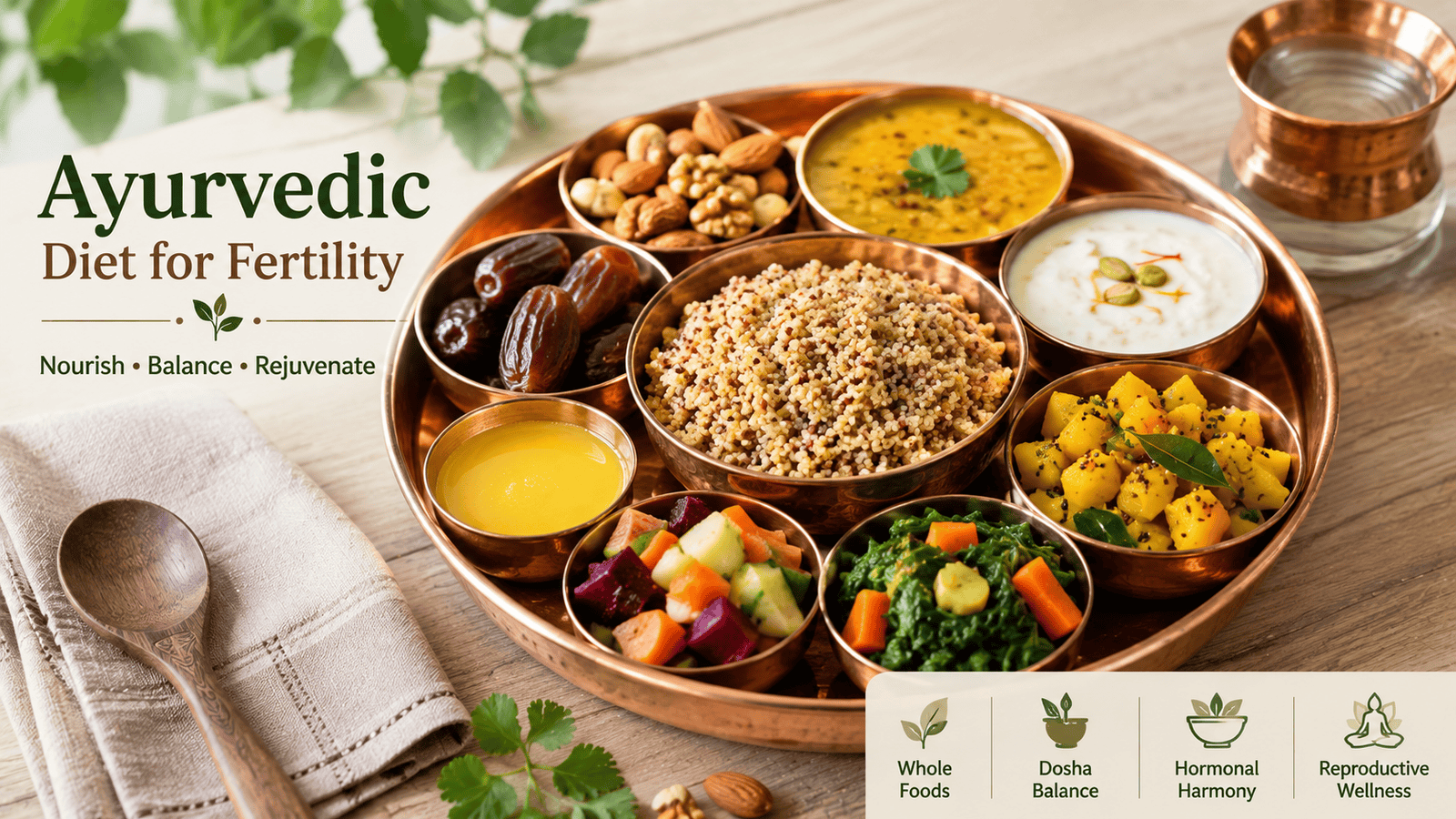
Certain foods appear again and again in classical Ayurvedic texts as directly supportive of Shukra and Artava Dhatu. These are staples I regularly build into patient meal plans:
Ghee. Considered one of the best carriers for nourishing deep tissues, ghee is unctuous (Snigdha) in quality — a property Ayurveda associates with lubrication, hormonal balance, and tissue nourishment. A small daily quantity, especially with warm meals, is something I recommend to nearly every fertility patient.
Almonds. Rich, grounding, and traditionally used to build strength (Bala) and reproductive vitality. Soaked overnight and peeled, they become easier to digest and are typically taken in the morning.
Dates. A classical Rasayana food, dates are warming, nourishing, and traditionally recommended for building both Shukra and Artava Dhatu, particularly in patients with a Vata-dominant constitution showing signs of dryness or depletion.
Sesame seeds. Deeply nourishing and warming, sesame seeds are traditionally used to support reproductive tissue and are particularly useful for patients with Vata imbalance — irregular cycles, dryness, or low reserve.
Milk. Warm, whole milk (ideally with a pinch of turmeric or a few strands of saffron) is a classical Rasayana beverage, valued for its tissue-building and calming qualities. I usually recommend it in the evening, away from heavy or incompatible foods.
Pomegranate. Valued in Ayurveda for supporting healthy blood tissue (Rakta Dhatu) — the layer that feeds directly into reproductive tissue — and appreciated for its cooling, Pitta-balancing qualities.
Whole grains. Foods like rice, wheat, and millets in their whole, unprocessed forms provide sustained nourishment without the digestive burden of refined alternatives, supporting steady Agni over time.
Foods I Advise My Patients to Avoid
Just as important as what to include is what to reduce or eliminate. In my consultations, I consistently flag four categories:
Processed foods. Packaged, refined, and preservative-heavy foods are considered heavy and difficult to digest, contributing directly to Ama formation.
Cold foods and drinks. Ice-cold beverages, refrigerated leftovers, and chilled foods are believed to dampen Agni, slowing digestion and, over time, weakening tissue formation. I generally recommend warm or room-temperature food and drink, especially around mealtimes.
Stale or reheated food. Freshly prepared meals are strongly preferred in Ayurveda. Food that has sat for extended periods is considered to lose its Prana (vital energy) and become harder to digest properly.
Excessively spicy or fried food. While some warming spice supports digestion, excessive heat and oil aggravate both Vata and Pitta — the two doshas most closely tied to hormonal and inflammatory reproductive concerns in my patients. I encourage moderation here rather than complete avoidance, since spices in balanced amounts can actually support Agni.
A Sample Day's Meal Plan I Often Recommend
Every patient at our clinic receives a personalized plan based on their Prakriti and specific concern, but here is a simple, general framework I often use as a starting point for fertility-focused patients:
Morning (on waking): A glass of warm water, followed by 4–5 soaked almonds and 2 soaked dates.
Breakfast: A warm bowl of whole-grain porridge (such as oats or daliya) cooked with milk, topped with a teaspoon of ghee and a few sesame seeds.
Mid-morning: A serving of pomegranate or seasonal fresh fruit.
Lunch: Whole grain (rice or wheat) with cooked seasonal vegetables, a portion of dal, and a small spoon of ghee — the main meal of the day, eaten warm and freshly prepared.
Evening: Herbal tea or warm water with a light snack if needed, such as a handful of soaked nuts.
Dinner: A lighter meal than lunch — khichdi or a simple vegetable and grain combination — eaten at least 2–3 hours before bedtime to support digestion overnight.
Before bed: A cup of warm milk, optionally with a pinch of turmeric.
This is a general template, not a one-size-fits-all prescription. In our clinic, we adjust portions, ingredients, and timing based on each patient’s dosha constitution, digestive strength, and specific fertility concern.
A Final Note From My Practice
In over years of treating fertility concerns with Ayurveda, I’ve seen consistently that diet is rarely the whole solution on its own — but it is almost always part of it. Strong Agni and quality nourishment give the body what it needs to build healthy Shukra and Artava Dhatu, which in turn creates a stronger foundation for every other stage of treatment, whether that’s herbal therapy, Panchakarma, or supporting a modern fertility treatment couples may already be pursuing.
If you’re trying to conceive and want a fertility diet plan personalized to your body’s constitution, I invite you to book a consultation at Dr. Narkhede Ayurved & Panchkarma Clinic, where we take the time to understand your unique digestive and reproductive health before recommending a path forward.