Raktmokshan Panchakarma
Raktamokshan Panchakarma: Benefits for Male and Female Fertility Treatment
Raktamokshan is the most selectively used of the Panchakarma therapies at the clinic. Unlike Basti or Abhyanga, which are used broadly across many conditions, Raktamokshan is reserved specifically for cases where Rakta — the blood tissue — has become significantly vitiated, and where clearing that vitiation directly benefits a woman’s or man’s fertility.
What Raktamokshan is
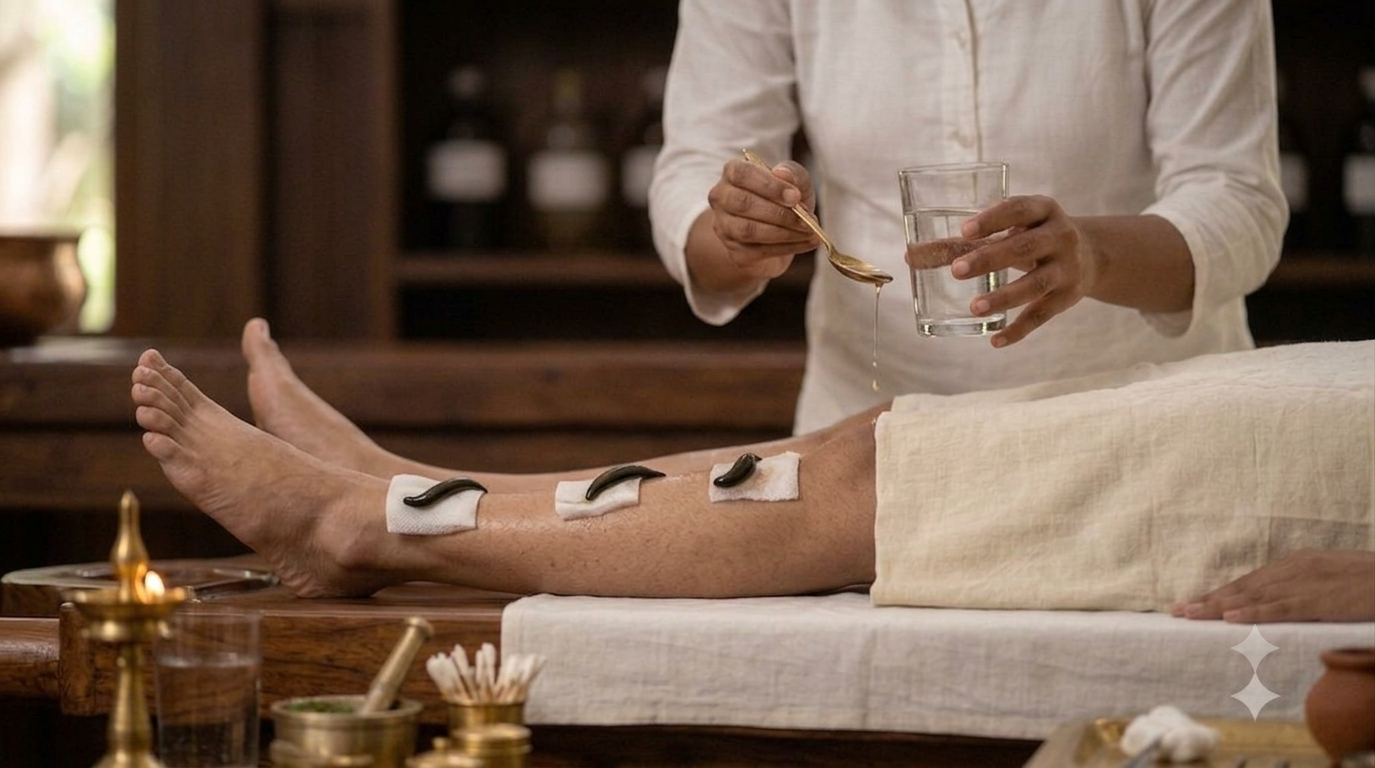
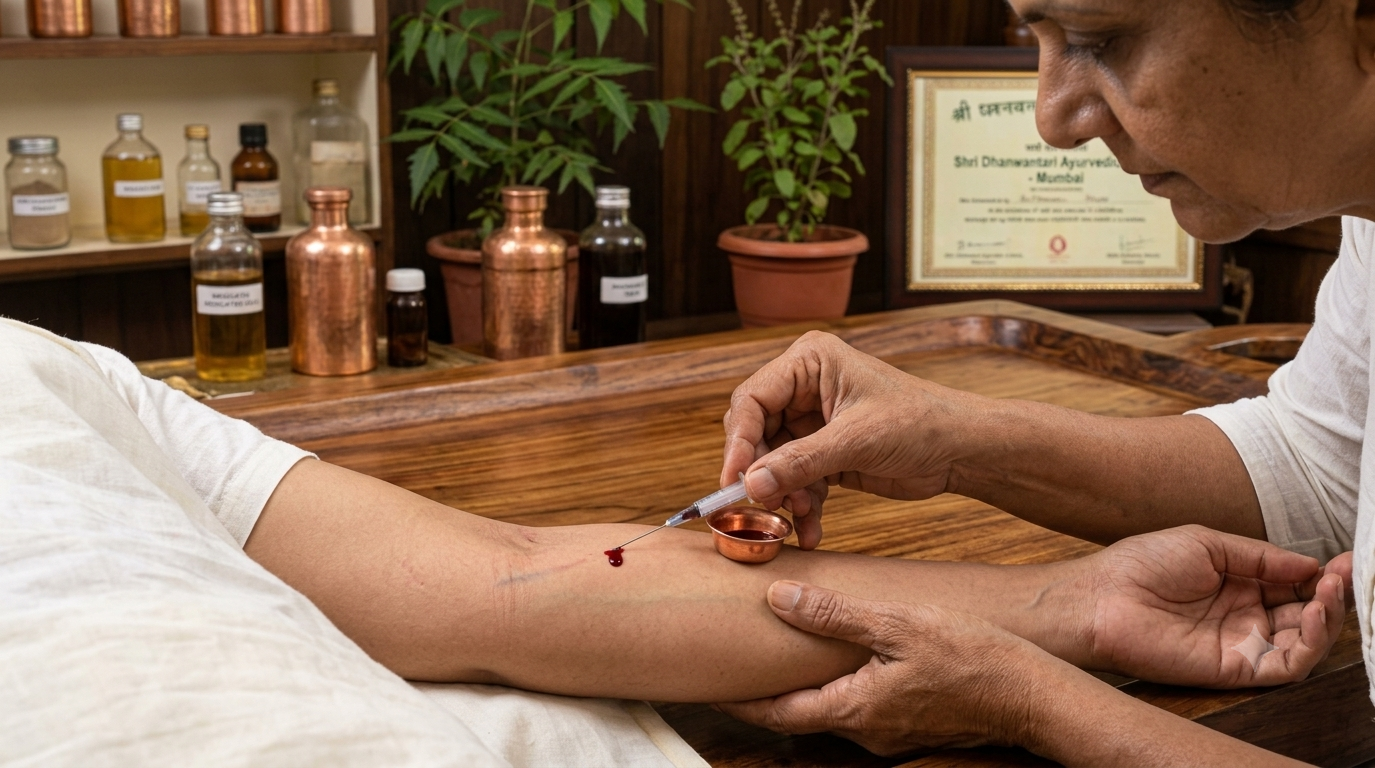
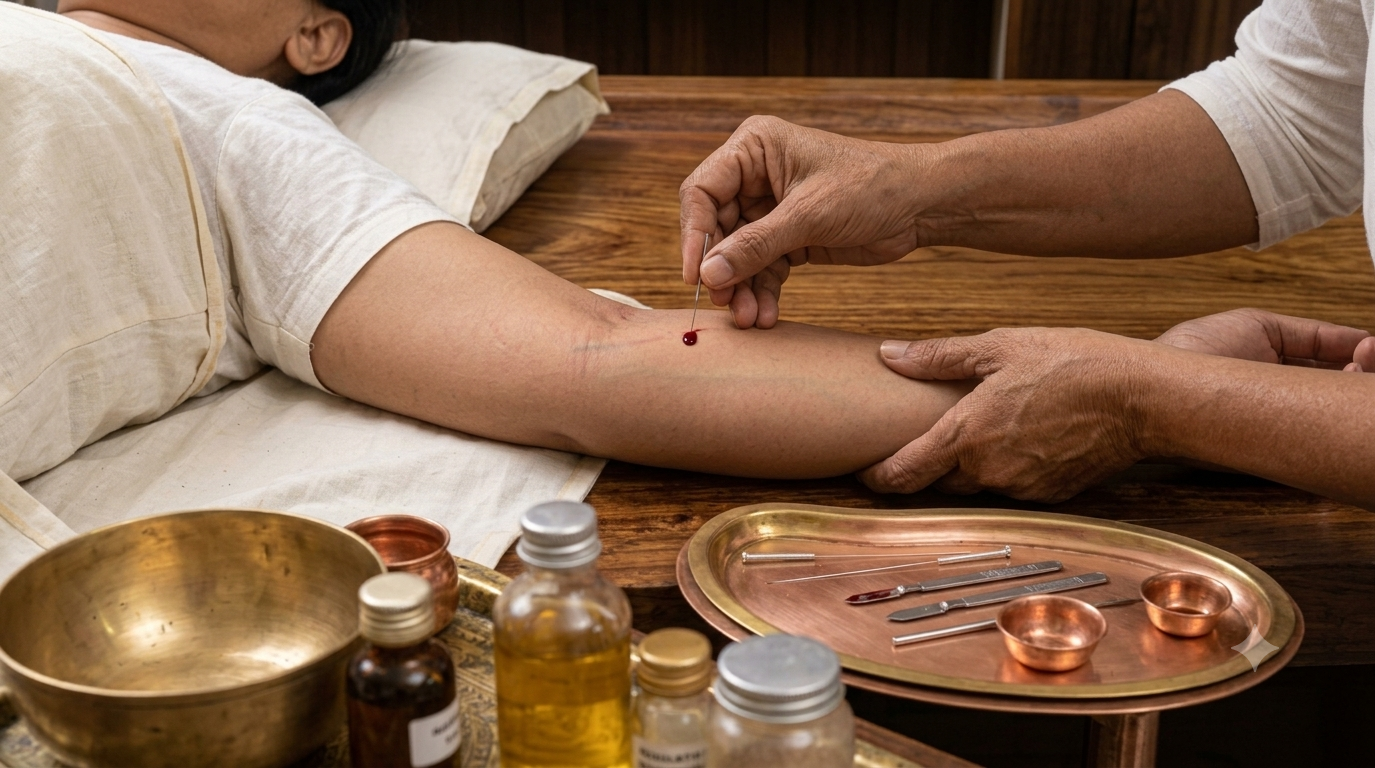
Raktamokshan (रक्तमोक्षण) is a precise, medically supervised bloodletting therapy. In classical Ayurveda it is counted among the main Panchakarma procedures, used to relieve localised congestion in tissue affected by vitiated Rakta dhatu. It is not performed routinely or as a general detoxification measure — it is used only where Rakta dushti (blood tissue vitiation) is clearly the driving factor behind a condition, and only after the physician has assessed that it is appropriate and safe for the individual patient.
Why Rakta vitiation matters for fertility
Rakta dhatu is closely linked with Pitta in Ayurvedic physiology, and its vitiation typically produces heat, inflammation, and localised congestion in whichever tissue it affects. In the reproductive system, this can interfere with the normal quality of tissue needed for conception — whether that is the uterine lining and surrounding tissue in women, or, in principle, the broader inflammatory load affecting reproductive health in men, though Raktamokshan’s role in male fertility is used far more selectively.
Benefits for female fertility
- Endometriosis — Raktamokshan is one of the more targeted therapies for endometriosis, since the condition is understood in Ayurveda as fundamentally a Vata-Rakta disorder. By relieving vitiated blood tissue directly, it supports a reduction in the cyclical inflammation and pain associated with the condition.
- Uterine fibroids — Since fibroids involve Kapha-Meda-Rakta vitiation, Raktamokshan is used selectively alongside Virechan to relieve the Rakta component of the Granthi (nodule) formation, particularly in cases with associated heavy bleeding.
- Menorrhagia (heavy bleeding) — Where menstrual irregularity presents with a strong Pitta-Rakta pattern of heavy, prolonged, or unusually hot-feeling bleeding, Raktamokshan can be considered as part of correcting the underlying blood tissue vitiation.
Benefits for male fertility
- Addressing localised inflammatory conditions — In select cases where a man’s fertility concern is linked to a clearly identified inflammatory or Rakta-vitiated presentation, Raktamokshan may be considered as part of a broader treatment plan, though this is far less common than its use in female conditions like endometriosis and fibroids.
- Supporting overall Pitta-Rakta balance — Where excess heat and inflammation are contributing to poor reproductive tissue quality, correcting the underlying Rakta vitiation can support the broader Panchakarma and herbal treatment plan.
Because Raktamokshan’s classical indications are most clearly established for gynaecological conditions such as endometriosis and fibroids, its use in male fertility treatment at the clinic is considered on a case-by-case basis rather than as a standard therapy.
What to expect
Raktamokshan is one of the more precise Panchakarma procedures and is used only after a clear clinical indication is established — Dr. Sagar Narkhede reviews a patient’s overall health, any existing blood-related conditions, and the specific presentation before recommending it. It is typically a single, closely supervised procedure rather than a repeated course, and is followed by standard post-therapy care to support recovery.
If you are dealing with endometriosis, uterine fibroids, or another condition where Rakta vitiation may be involved, Dr. Narkhede Ayurved & Panchkarma Clinic offers a personalised consultation with Dr. Sagar Narkhede to assess whether Raktamokshan is appropriate as part of your treatment plan.