Uterine Fibroid Ayurvedic Treatment
Support Uterine Health. Balance Hormones. Promote Natural Women’s Wellness.
Uterine Fibroid Ayurvedic Treatment
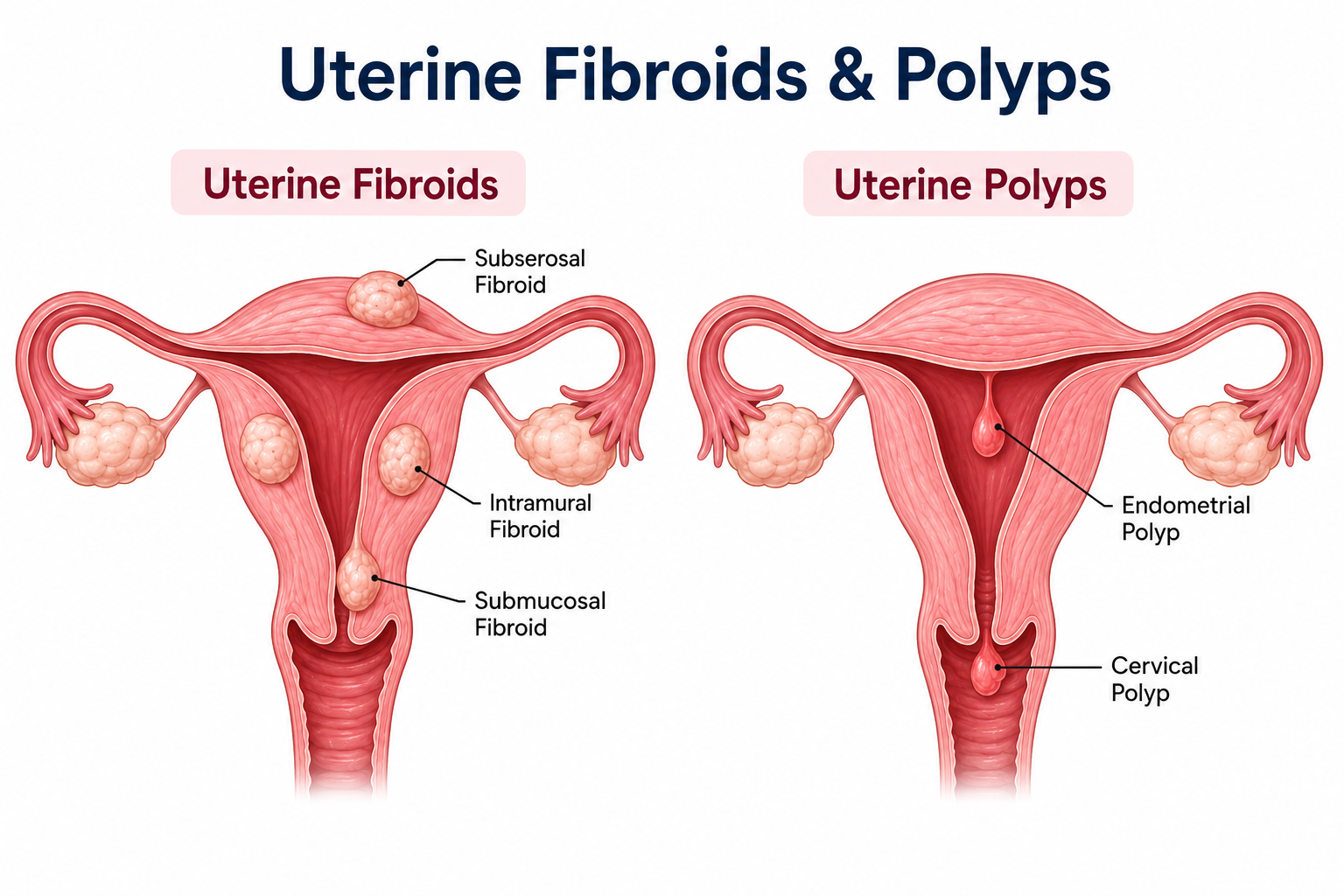
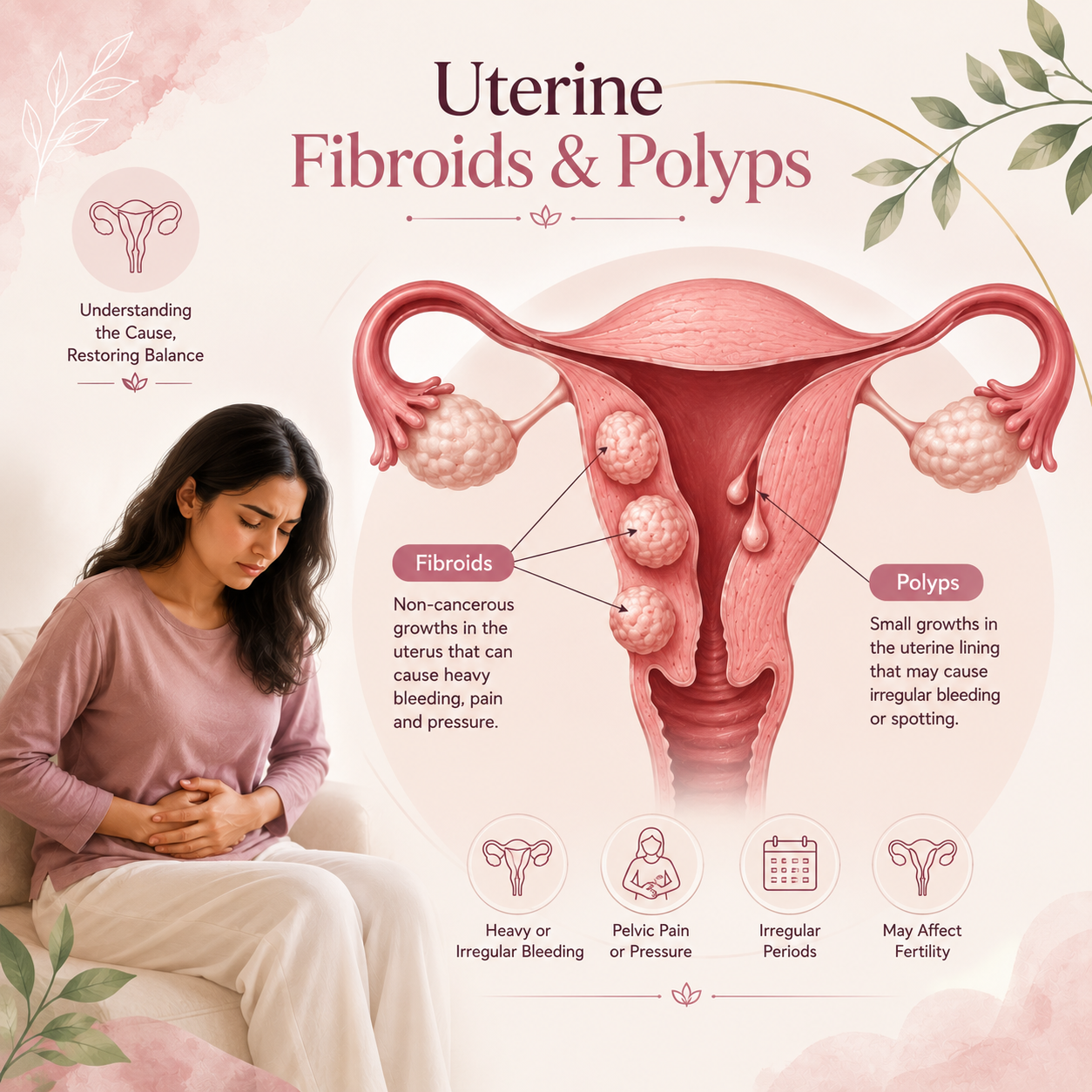
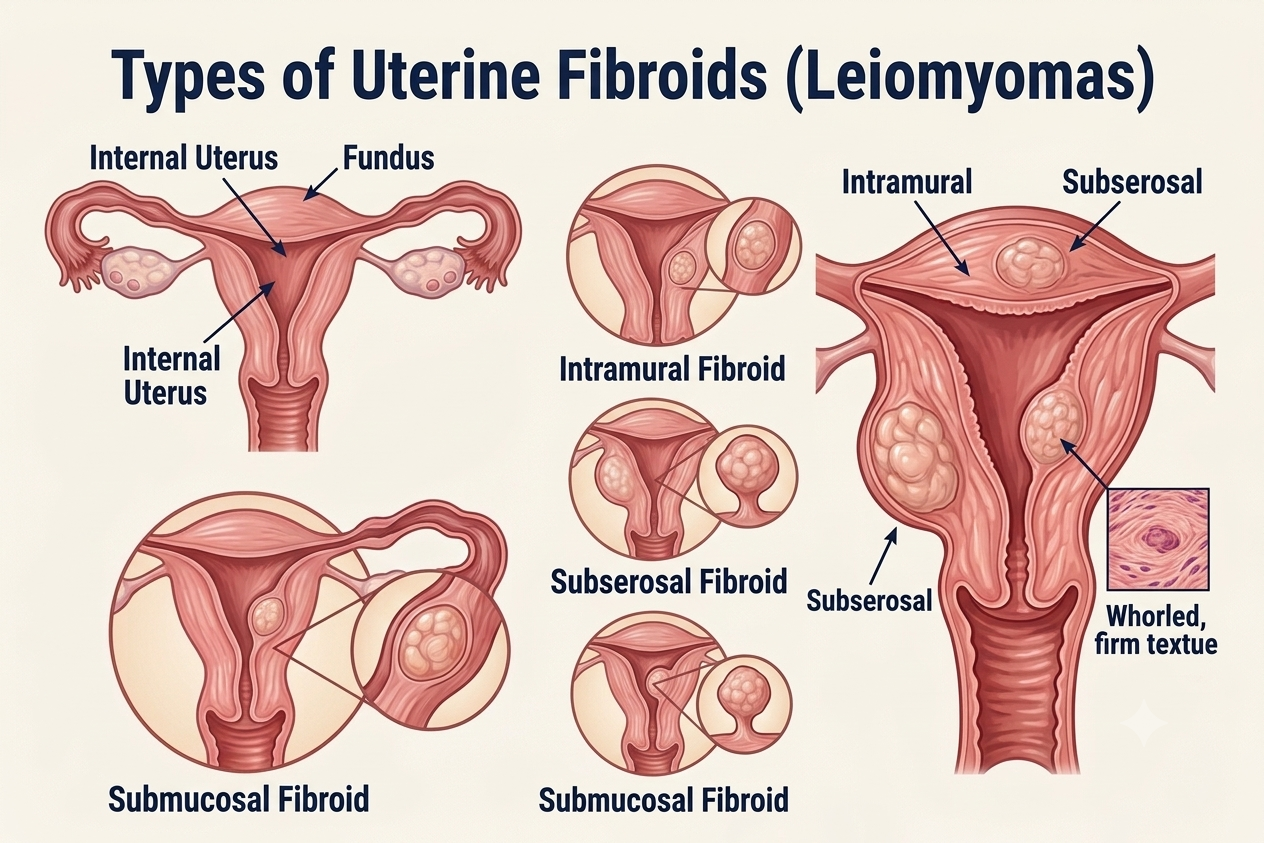
Uterine fibroids are among the more physically noticeable causes of female infertility — a growth within or on the uterus that can interfere with implantation, cause heavy bleeding, or create a persistent sense of pelvic heaviness. Ayurveda names this condition Garbhashaya Granthi, and Uterine Fibroid Ayurvedic treatment is directed at correcting the tissue-level imbalance that allows such a growth to form, alongside managing its physical effects.
How Ayurveda understands uterine fibroids
Ayurveda describes a fibroid as a Granthi — a nodule or knot — forming within the Garbhashaya (uterus) through the combined vitiation of Kapha, Meda (fat tissue), and Rakta (blood tissue), compounded by accumulated Ama. When Kapha’s naturally stable, structure-building quality combines with vitiated Meda and Rakta, and Ama settles into this mix instead of being cleared, the body forms a dense, persistent growth rather than healthy tissue. In more advanced or larger presentations, this may be referred to as Arbuda, reflecting a more established growth.
This explains why fibroids tend to develop slowly and silently — the underlying Kapha-Meda-Rakta congestion usually builds over years before it becomes large enough to cause symptoms or show up on a scan.
Common signs
- Heavy or prolonged menstrual bleeding
- A sense of pelvic heaviness or pressure
- A palpable lump or firmness in the lower abdomen in larger cases
- Pain or discomfort during periods or intercourse
- Frequent urination if the fibroid presses on the bladder
- Difficulty conceiving or recurrent pregnancy loss, depending on the fibroid’s size and location
Underlying causes
- Kapha-Meda vitiation — the structural basis of the Granthi, providing the density and mass of the growth.
- Rakta dushti — vitiated blood tissue contributing to the growth’s formation and to heavy bleeding.
- Ama accumulation — undigested toxin settling into the affected tissue rather than being cleared by the body.
- Agnimandya — weak digestive fire allowing Ama to form and persist over time.
- Sedentary lifestyle and heavy diet — reinforcing Kapha and Meda vitiation over the years the fibroid develops.
- Chronic hormonal or metabolic imbalance — often layered onto the Kapha-Meda-Rakta picture and worth assessing alongside the Ayurvedic evaluation.
The treatment approach
Uterine Fibroid Ayurvedic treatment at the clinic works to reduce Kapha and Meda, cleanse vitiated Rakta, and clear Ama from the affected tissue, aiming to shrink the growth and reduce associated symptoms such as heavy bleeding.
Panchakarma therapies used:
- Virechana — therapeutic purgation to clear Ama and reduce Kapha-Pitta vitiation, considered central to fibroid management.
- Raktamokshana — selective bloodletting, used in cases with significant Rakta dushti to relieve local congestion.
- Basti — medicated enema, used to support overall channel clearing and Vata balance.
- Udvartana — herbal powder massage to reduce Kapha and Meda and support metabolism.
Supporting herbal formulations commonly include Kanchnar Guggulu, the classical Ayurvedic formulation specifically indicated for Granthi (nodules) and Arbuda, along with Varunadi Kwath and other Kapha-reducing, Rakta-cleansing preparations selected according to the fibroid’s size, location, and the woman’s Prakriti.
Diet and lifestyle alongside treatment
Since fibroids are rooted in Kapha-Meda-Rakta congestion, a Kapha-reducing diet is central to supporting treatment. Light, warm, freshly cooked meals; regular physical activity; and avoiding excess weight gain are generally favoured. Fried, oily, heavy, and dairy-rich foods; prolonged inactivity; and excess red-meat or heat-generating foods that aggravate Rakta are generally avoided, since each reinforces the same congestion the treatment aims to clear.
What to expect from treatment
Fibroids typically take time to form and take time to respond to treatment — most women are monitored across several months, with periodic scans to track any change in size alongside symptom improvement such as reduced bleeding and pelvic heaviness. The right approach depends heavily on the fibroid’s size, number, and location: Dr. Sagar Narkhede reviews existing ultrasound reports before advising whether Ayurvedic treatment alone is appropriate or whether it should be combined with other medical management, particularly for very large fibroids or those significantly affecting the uterine cavity.
If you’ve been diagnosed with a uterine fibroid and are looking for Uterine Fibroid Ayurvedic treatment, Dr. Narkhede Ayurved & Panchkarma Clinic offers a personalised consultation with Dr. Sagar Narkhede to review your reports and recommend the right combination of Panchakarma, herbal medicine, and daily routine for your case.