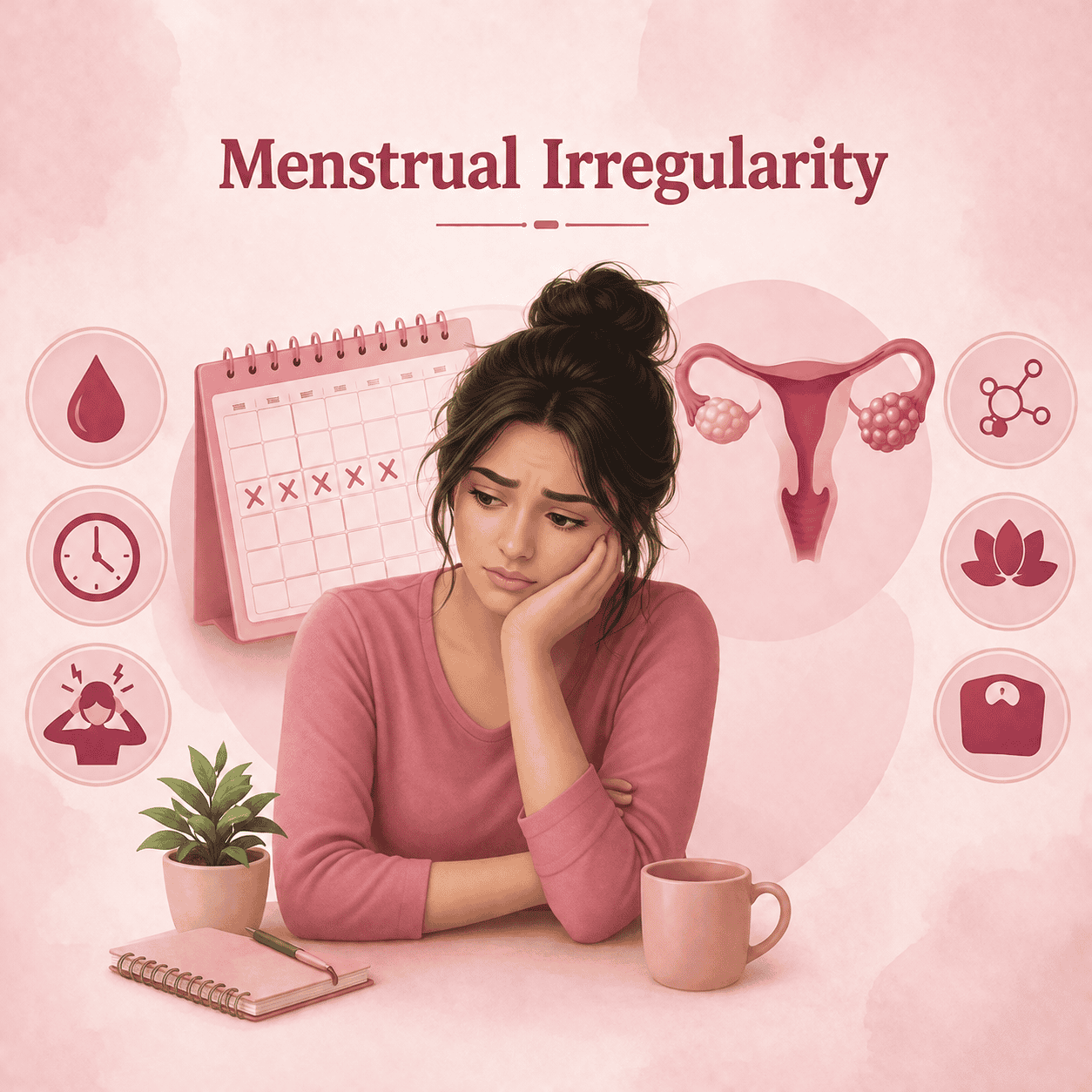
Menstrual Irregularity Ayurvedic Treatment
Ayurveda offers a holistic approach to managing menstrual irregularity by addressing the root cause rather than just relieving symptoms. At Dr. Narkhede Ayurved & Panchkarma Clinic, personalized herbal medicines, Panchkarma therapies, dietary guidance, and lifestyle modifications help restore hormonal balance and support a healthy, regular menstrual cycle.
What is Menstrual Irregularity?
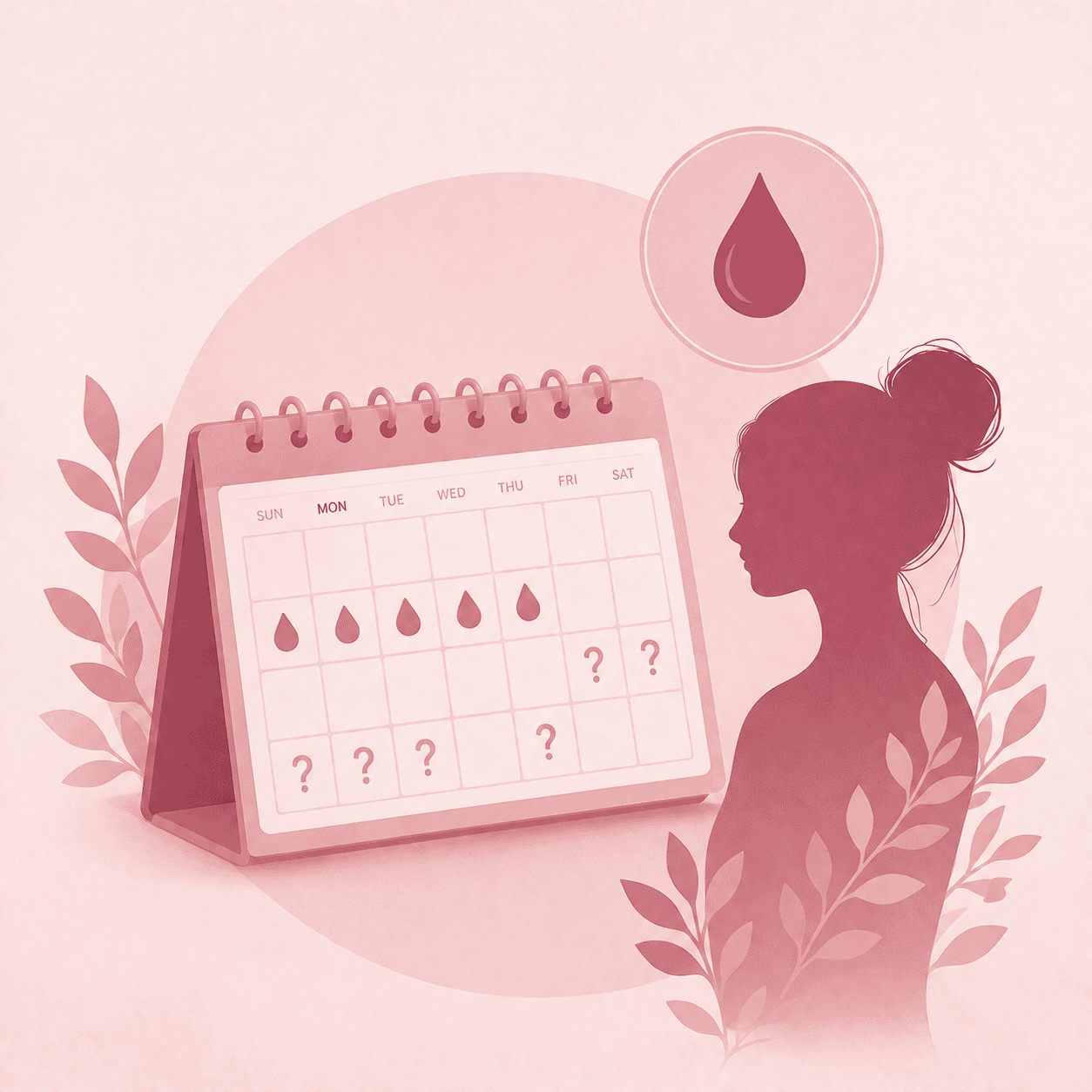
A regular menstrual cycle is one of the clearest signs that a woman’s reproductive system is in balance. When periods become delayed, scanty, heavy, absent, or painful, Ayurveda reads this not as an isolated problem but as a signal that Artava dhatu — the reproductive tissue — and the doshas governing it have moved out of balance. Menstrual irregularities ayurvedic treatment is built around correcting that underlying imbalance, rather than only regulating the cycle for a few months at a time.
Infertility affects a large number of couples trying to conceive, and in a significant share of cases the underlying cause lies with the woman’s reproductive health. Modern medicine looks at female infertility through hormones, scans, and lab values. Ayurveda looks at the same problem through a different but complementary lens — the balance of the three doshas (Vata, Pitta, Kapha), the health of Artava dhatu (the reproductive tissue), and the strength of Agni (digestive fire). Female infertility treatment in Ayurveda is built around correcting these root imbalances rather than only managing the symptom
What Ayurveda calls Anartava
Ayurveda groups every deviation from a normal, rhythmic cycle under the term Anartava. This covers a range of patterns that look different on the surface but share the same root process — a disturbance in the Artava vaha srotas, the subtle channels that support menstruation and ovulation:
- Oligomenorrhea — infrequent periods, with cycles longer than 35 days.
- Amenorrhea — absence of periods for three cycles or more.
- Menorrhagia — unusually heavy or prolonged bleeding.
- Polymenorrhea — frequent periods, with cycles shorter than 21 days.
- Dysmenorrhea — painful periods with cramping.
- Hypomenorrhea — unusually light or scanty flow.
A woman may experience one of these patterns consistently, or move between a few of them over time — which is common when the underlying dosha imbalance hasn’t been addressed.
How treatment is approached
Menstrual irregularity ayurvedic treatment at the clinic is built in layers, chosen according to the dosha pattern diagnosed in each woman:
- Basti — medicated enema, the principal therapy for Vata-type irregularity, delayed cycles, and painful periods.
- Virechana — therapeutic purgation, used to clear the Pitta-Kapha toxins behind heavy or prolonged bleeding.
- Uttar Basti — local uterine therapy that nourishes Artava dhatu directly, used in longer-standing cases.
- Abhyanga and Swedana — herbal oil massage with steam to pacify Vata and improve pelvic circulation.
- Snehapana — internal oleation, used ahead of Panchakarma in Vata-dominant or depleted cases.
- Rasayana chikitsa — rejuvenative therapy to rebuild Artava dhatu where flow has become scanty or absent.
These are supported by classical internal formulations — Ashokarishta, Shatavari, Dashmoolarishta, Kumaryasava, Chandraprabha Vati, and Lodhra among them — selected based on the dosha involved and the woman’s Prakriti (constitution).
Diet and lifestyle alongside treatment
Dinacharya (daily routine) is treated as part of the therapy, not an afterthought. Warm, freshly cooked, easily digestible meals; regular sleep and waking times; gentle daily movement such as walking or yoga; and warm sesame oil self-massage on non-bleeding days are generally encouraged. Excess cold or stale food, skipped meals, late nights, and unmanaged stress are generally avoided, since each of these tends to re-aggravate the same dosha that caused the irregularity in the first place.
What to expect from treatment
Because Artava dhatu rebuilds gradually, most patients are monitored across three to six menstrual cycles rather than expecting change within a single course of medicine. Panchakarma is not used in every case — Dr. Sagar Narkhede recommends it specifically where Ama accumulation or significant dosha vitiation is diagnosed, while milder cases may respond to internal medicine and daily-routine changes alone. Menstrual irregularity is also frequently the first visible sign of PCOD, so the two are often assessed and treated together.
If you’re dealing with irregular, painful, heavy, or absent periods and are looking for menstrual irregularities ayurvedic treatment, Dr. Narkhede Ayurved & Panchkarma Clinic offers a personalised consultation with Dr. Sagar Narkhede to identify the dosha pattern involved and recommend the right combination of Panchakarma, herbal medicine, and daily routine for your case.
The three dosha patterns behind irregular periods
Ayurveda classifies Anartava by which dosha is dominant, because the treatment differs meaningfully between them.
Vataja Anartava shows up as delayed or missed cycles, scanty and dark flow, cramping pain, and dryness. It is commonly triggered by stress, an irregular daily routine, excessive fasting, or travel — all of which aggravate Vata.
Pittaja Anartava presents as frequent cycles, heavy bright-red flow, a burning sensation, and irritability. This pattern is usually linked to a heat-generating diet, chronic stress, and a Pitta-aggravating lifestyle.
Kaphaja Anartava involves prolonged or absent cycles, a thick and sluggish flow, heaviness, and often weight gain. It typically develops from a sedentary routine, a heavy or oily diet, and the accumulation of Ama (undigested metabolic toxin).
Root causes Ayurveda looks for
Behind any of these patterns, a few underlying causes tend to recur:
- Agnimandya — weak digestive fire, which leads to improperly formed reproductive tissue.
- Ama accumulation — undigested toxins clogging the fine reproductive channels.
- Vata provocation — irregular routine, stress, and disturbed sleep unsettling the cycle’s natural rhythm.
- Improper diet — excess cold, processed, or heavy food weakening Agni over time.
- Dhatu kshaya — depletion of reproductive tissue from chronic stress, overwork, or age.
- Underlying conditions — associated PCOD, thyroid imbalance, or uterine pathology aggravating the irregularity.